
The Best Forex Strategies: Quality Over Quantity
The “best” strategy is not the one with the highest backtested win rate—it is the one you can execute with absolute discipline. In this guide, we focus on three proven, structural strategies that rely on price action rather than lagging indicators.

BRIAN ROSEMORGAN
Retired Professional Trader | 8+ Years Experience | South Africa
AI SUMMARY
A strategy is merely a set of rules for identifying high-probability zones. The three strategies below—Trend Following, Support/Resistance Reversal, and Breakout Trading—form the core of professional trading. We emphasize how to use them with proper risk management and patience.
1. Trend Following (The Path of Least Resistance)
Trading with the trend is the most reliable way to maintain a positive expectancy. Use Exponential Moving Averages (EMA) to confirm the directional bias. Only take trades in the direction of the EMA slope. When the trend is clear, you don’t need complex indicators—you just need patience.
2. Support and Resistance Reversals
The market has a “memory.” Identify key historical zones where price has previously reacted. When price returns to these zones, look for a rejection signal (like a pin bar or engulfing candle). This is a high-probability strategy for traders who prefer “buying low and selling high.”
3. Breakout Trading
Breakouts occur when price moves out of a consolidation phase, indicating a shift in momentum. The key here is to wait for the “retest.” Don’t chase the initial candle; wait for the price to break, come back to test the structure, and then move in your favor.
4. Combining Strategies with Market Sessions
Your strategy is only as good as the market context. The London-New York overlap provides the highest liquidity and volatility, making it ideal for breakout strategies. Conversely, the Asian session is often better suited for range-bound, reversal strategies.
5. The Importance of Backtesting
Before putting real capital into any of these strategies, backtest them for at least 100 trades. Document your entry, exit, and risk-to-reward ratio. This builds the confidence required to stick to your rules when the market moves against you.
6. The “No-Hype” Truth About Strategies
No strategy works 100% of the time. The difference between a profitable trader and a beginner is not the “secret strategy”—it is the ability to lose small on bad trades and win big on good ones. Discipline is your true edge.
Strategy Comparison Table
| Strategy | Best Market Condition |
|---|---|
| Trend Following | Strong Momentum |
| Reversals | Range-bound / Key Levels |
| Breakouts | High Volatility Periods |
⚠️ Common Strategy Mistakes
1. Over-Optimization: Adding too many indicators creates “analysis paralysis.” Keep your charts clean.
2. Changing Strategies Daily: Mastery comes from repetition. If a strategy fails, don’t ditch it—analyze why.
3. Ignoring Risk: A “good” strategy without a stop-loss is a recipe for disaster.
🚀 Next Step: Choose Your One
Do not try to master all three at once. Pick the one that fits your personality—whether you prefer riding trends or catching reversals—and demo trade it exclusively for one month.
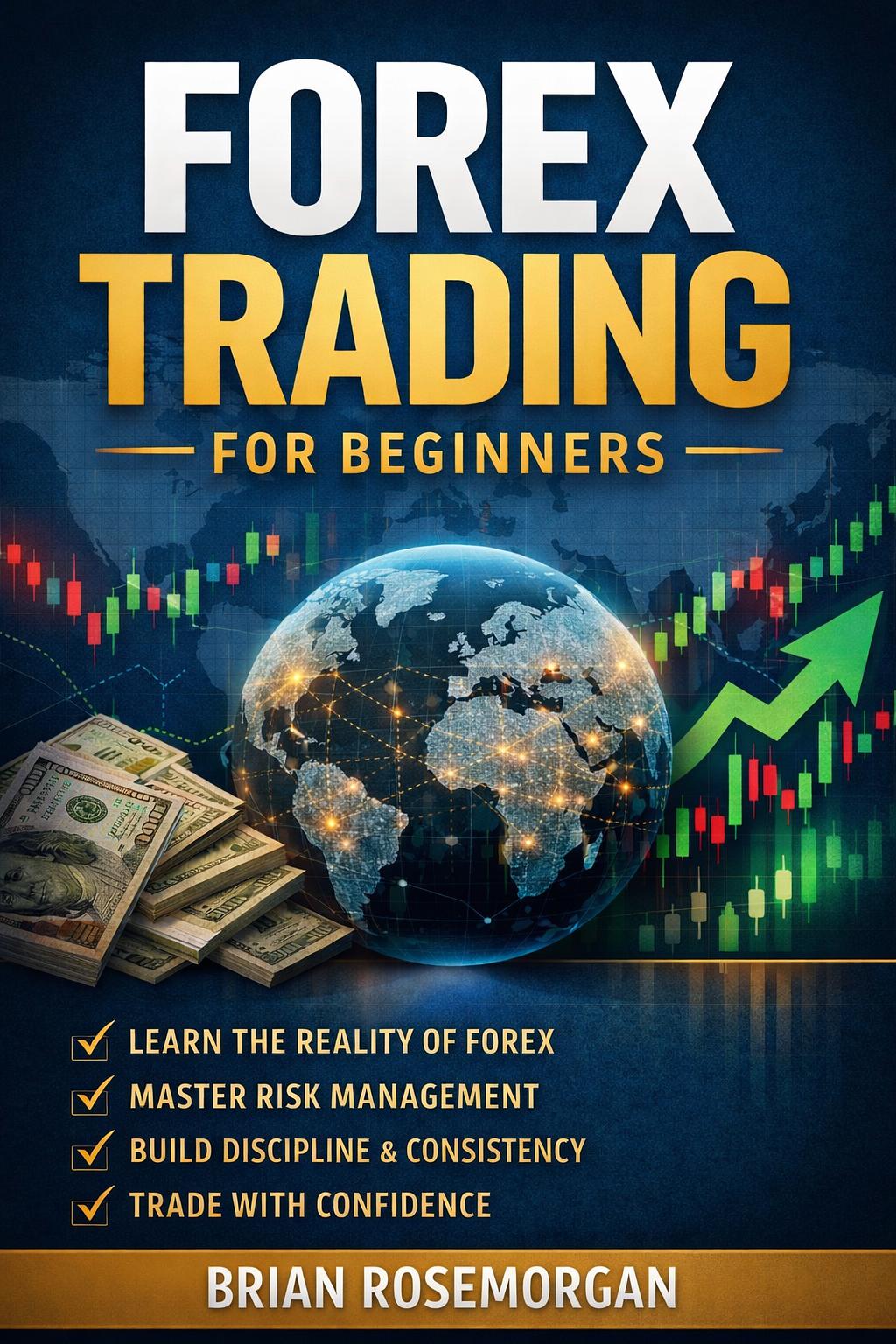
GET THE BOOK
My book provides a deep dive into these strategies, including exact entry criteria and the psychological framework required to execute them with professional consistency.
Frequently Asked Questions
1. Which strategy is best for beginners?
Trend following is ideal for beginners because it focuses on identifying the primary direction of the market. By trading with the momentum rather than against it, you can simplify your analysis, reduce stress, and learn essential market structure fundamentals consistently.
2. How many indicators do I need?
Keep your charts as clean as possible. You only need one or two indicators, such as moving averages, to confirm trend direction. Overloading your screen with too many indicators creates analysis paralysis, which makes it difficult to execute your trade plan confidently.
3. Should I use automated strategies?
Automation is useful only if you have manually coded and rigorously tested the strategy yourself. Never rely on bought robots or “black box” systems promising overnight success. True profitability comes from understanding the logic behind every trade executed on your live account.
4. How long does it take to master a strategy?
Mastery is a marathon, not a sprint. You should expect at least six months of consistent practice in a demo environment or with a micro-account. This allows you to experience various market cycles while refining your discipline and perfecting your technical entry setups.
5. Can I use these strategies on any timeframe?
While these strategies can technically be applied to any timeframe, higher timeframes like the H1, H4, or Daily charts are generally more reliable. They filter out significant market noise and provide clearer signals, leading to higher probability setups for your trading account.
6. Why do professional traders use few indicators?
Professionals know that indicators are simply lagging visual aids for price action that has already occurred. Price is the only leading indicator. By prioritizing candlestick patterns and market structure, they can interpret the true story of supply and demand without unnecessary distractions.
7. How do I know if a strategy is right for me?
A strategy must align with your personal risk tolerance and psychological comfort level. If a particular method causes you significant stress or leads to impulsive decisions, it is not the right fit. Seek a approach that feels intuitive and sustainable for your lifestyle.
8. Is it possible to lose money with a good strategy?
Absolutely. Even the most effective strategy will encounter losing streaks. The difference between success and failure is not the win rate, but how you manage risk. Protecting your capital ensures you remain in the market long enough to recover from inevitable minor losses.
9. How do I improve my win rate?
Instead of obsessing over your win rate, focus on improving your risk-to-reward ratio. You can remain highly profitable with a win rate below 50% if your winning trades are consistently larger than your losses. This mathematical edge is the cornerstone of professional trading.
Disclaimer: Forex trading involves significant risk and may not be suitable for all investors. This content is provided for educational purposes only and should not be considered financial advice. Always conduct your own research and apply appropriate risk management before placing trades.