
Forex Trading Psychology for Beginners
Last Updated: June 2026
80% Mental, 20% Technical
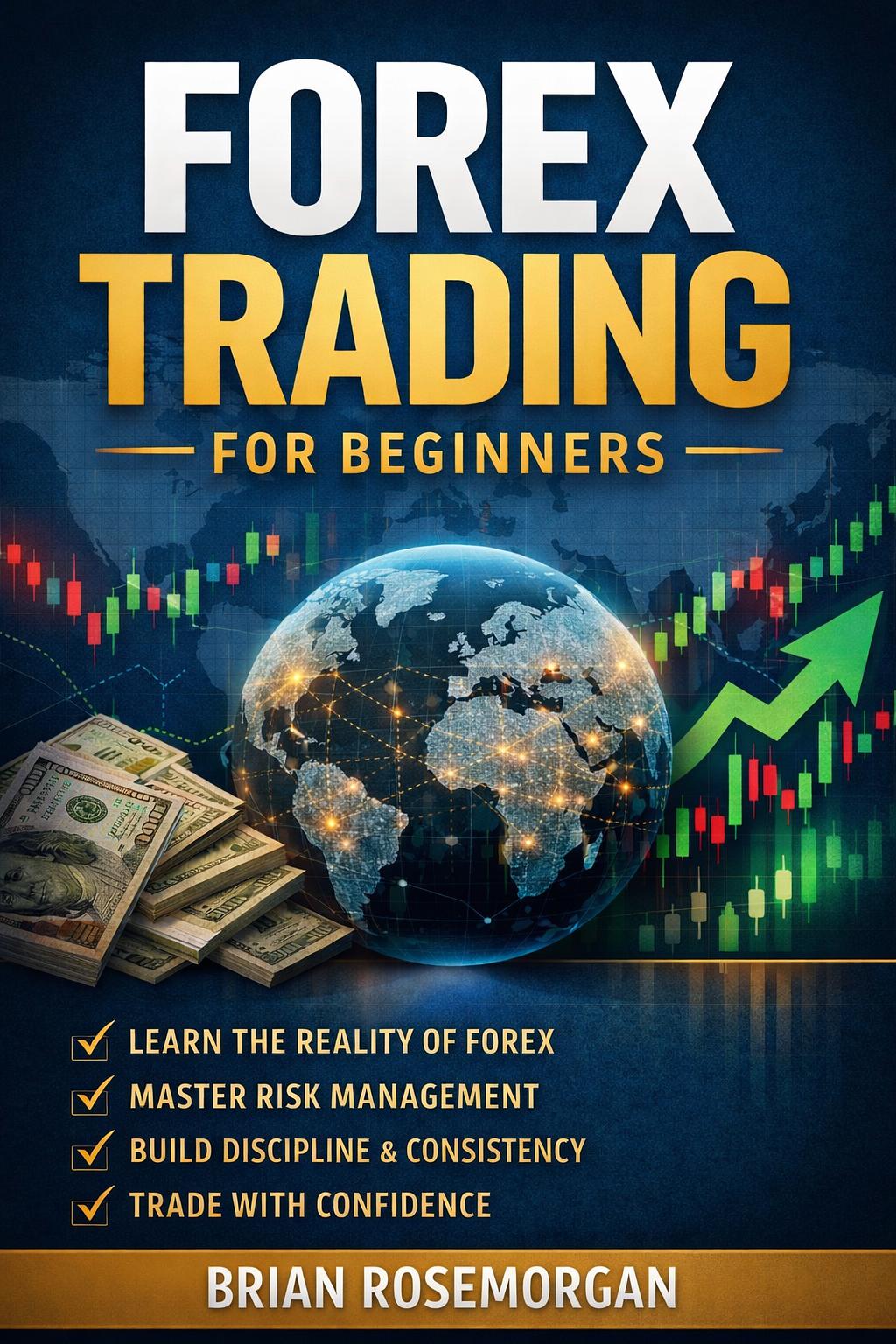
Trading is often framed as a mathematical puzzle, but the reality is that the most sophisticated system will fail if you cannot handle the emotional pressure of the markets. Brian Rosemorgan here—in this guide, we strip away the hype to focus on building the mindset of a professional trader from day one.
A “30-Day Learning Roadmap” complete all the modules listed here and you will truly have learned everything you need to start forex trading.

Brian Rosemorgan
Retired Professional Trader | 8+ Years Experience
Questions? WhatsApp me directly →
🤖 AI Overview: Trading Psychology
Trading psychology is the fundamental framework that dictates how a trader executes their technical strategy, focusing on how cognitive biases and emotional responses—such as fear and greed—can distort decision-making. Mastery begins with a shift in perspective, moving from a results-oriented mindset to a process-oriented one where every trade is treated as a statistical probability.
Strict risk management serves as the primary tool for emotional control. Implementing a fixed 1% risk rule removes the “sting” of individual losses, which prevents the reactive, impulsive behaviors—like revenge trading—that lead to account depletion. A trader who manages risk effectively naturally finds it easier to remain calm and objective under pressure.
Ultimately, success is built on a foundation of rigorous self-analysis and disciplined routine. Through consistent journaling and periodic review, traders can identify their unique psychological triggers and refine their behavior, ensuring that their mental state remains aligned with their objective trading plan regardless of market volatility.
Quick Navigation:
1. Understanding the Emotional Cycle
New traders often fall into a cycle of excitement, fear, and regret. Professional trading requires moving beyond these immediate reactions by focusing on a rules-based system that remains static regardless of whether the last trade was a winner or a loser.
2. The Power of the 1% Risk Rule
The most common cause of “psychological breakdown” is over-leveraging. By strictly risking no more than 1% of your capital per trade, you remove the emotional sting of a loss, allowing you to stay objective for the next opportunity.
3. Detaching From the Outcome
You cannot control the market, only your execution. When you view your trading system as a probability model rather than a “get rich quick” scheme, you stop trying to force trades and start waiting for high-probability setups.
4. Overcoming Revenge Trading
Revenge trading is the desire to recover losses immediately. This is the fastest way to blow an account. A professional’s rule is simple: if you reach your daily loss limit, you close the platform, step away, and return only when your mind is clear.
5. The Importance of Journaling
A trade journal isn’t just about recording numbers; it is about tracking your mental state. If you can identify that you tend to over-trade when tired, you can build rules to avoid those specific pitfalls.
Frequently Asked Questions
- Why do I feel fear during a trade? Fear is a biological response to the threat of loss. When your risk per trade is small, fear naturally diminishes.
- How do I stop revenge trading? Establish a mandatory “walk-away” rule. If you hit your daily stop-loss limit, shut down your computer for the day.
- Is it normal to feel emotional while trading? Yes. However, a professional manages these emotions by sticking strictly to their pre-defined plan regardless of their current mood.
- How does journaling improve my psychology? It turns subjective feelings into objective data, allowing you to identify patterns of bias and correct them.
- Can meditation help with my trading? Yes. Mindfulness practices lower cortisol levels, helping you enter a calm, focused state before opening the charts.
- Should I trade when I am stressed? Never. Trading requires peak mental clarity. If you are sleep-deprived or stressed, the best trade is not to trade at all.
- How do I handle a losing streak? Take a mandatory week-long break. Stepping back helps you regain perspective when you are “out of sync” with the market.
- Is a demo account useful for mindset? Absolutely. It allows you to practice without the pressure of real-money loss, helping build confidence in your system.
- How do I build real trading confidence? Confidence is a byproduct of backtesting. When you have statistically proven your strategy works, you trust your edge.
📚 Useful Trading Resources
Continue your education with these foundational articles:
6. Long-term Mindset Development
Mindset isn’t built in a day. It is the result of thousands of hours of market exposure. Treat every session as a learning opportunity, regardless of the P&L result.
7. The Professional Perspective: 8 Years in the Trenches
After nearly a decade in the live markets, I learned that the secret isn’t a “holy grail” indicator—it’s consistency. Your emotions are the biggest threat to your account, and market discipline is the only true competitive advantage.
8. The Psychological Entry Checklist
Before clicking “buy” or “sell,” ask: “Am I taking this trade because my strategy requires it, or because I’m bored/anxious?” If the answer isn’t the former, do not enter.
9. Controlling the Exit Anxiety
Anxiety at the exit often stems from a lack of a plan. If you have defined your targets and stop-losses *before* entering, you don’t need to “worry” while the trade is live. You simply let the market hit your levels.
10. Common Cognitive Biases
Traders often fall victim to the “confirmation bias,” where we look for evidence that we are right rather than evidence that the market is wrong. Always look for reasons *not* to take a trade before you look for reasons *to* take one.
11. Building Confidence Through Data
Your confidence should not come from hope; it should come from your backtesting log. When you know, statistically, that your system performs well over 100 trades, the pressure of a single losing trade evaporates.
12. Daily Psychological Prep
Spend 10 minutes before your session centering yourself. Review your trading rules, clear your workspace, and ensure you are mentally ready for the risk you are about to manage.
13. Psychological States Comparison
| State | Decision Making | Risk Profile |
|---|---|---|
| Professional | Rules-Based / Calm | Calculated (1%) |
| Amateur | Emotion-Driven / Reactive | High (Random) |
14. Real-World Example: Maintaining Focus
During a recent period of high volatility on the EUR/USD, I had three consecutive losses. An amateur would have increased lot size to “make it back.” A professional, following the routine, simply stopped, verified that the system was still valid, and waited for the next high-probability setup.
🛠 Recommended Trading Tools
AvaTrade
XM Global
Final Thoughts
Trading psychology isn’t something you master overnight. Every trade is an opportunity to strengthen your discipline. Beginners who focus on emotional control, risk management, and consistent execution give themselves the best chance of long-term success.
Disclaimer: Trading foreign exchange carries risk. Please read our full Risk Disclosure.