
updated august 2026

Brian Rosemorgan
Retired Professional Trader | 8+ Years Experience | South Africa
Questions?
What Is Forex Trading? A Beginner’s Guide to the Global Currency Market
Forex trading, short for foreign exchange trading, is the decentralized global market where all the world’s currencies are exchanged. Unlike traditional stock exchanges that operate out of centralized physical buildings like Wall Street, the forex market functions electronically around the clock across a global network of financial institutions, commercial banks, brokers, and retail speculators.
At its core, trading forex involves simultaneously buying one currency while selling another. Currencies are always quoted in pairs—such as the EUR/USD or GBP/USD—because the value of any single currency can only be measured relative to the value of a counter currency. Speculators look to profit from these minor fluctuations in exchange rates driven by global economic data, interest rates, and geopolitical shifts.
Throughout this lesson, you will master the foundational mechanics of how currency exchange works, understand how quotes and spreads are structured, and learn why approaching the forex market with realistic expectations and strict risk parameters is vital for capital preservation before you ever risk real money.
1. The Decentralized Global Market Structure
Unlike centralized stock markets, the forex market has no single central physical exchange. Trading is conducted over-the-counter via computer networks connecting global participants. This unique decentralized architecture allows the market to operate generally 24 hours a day, five days a week, from Sunday evening to Friday evening depending on the time zone and broker.
2. Understanding Currency Pairs and Quotations
Currencies are always traded in pairs, split into a base currency and a quote currency. When you buy a pair like EUR/USD, you are buying Euros while simultaneously selling US Dollars. The exchange rate tells you exactly how many units of the quote currency are required to purchase one single unit of the base currency.
3. Major, Minor, and Exotic Currency Pairs
Trading pairs are categorized into distinct groups based on liquidity and trading volume. Major pairs include the US Dollar paired with other dominant global currencies like the Euro, British Pound, or Japanese Yen. Minors lack the US Dollar, while exotics pair a major currency with that of an emerging economic market.
4. The Concept of Pips and Spread Costs
A pip represents a standardized unit of price movement used to measure changes in many forex exchange rates. For most major currency pairs, a pip is typically the fourth decimal place, although some pairs such as JPY pairs use different decimal conventions. The spread is the difference between the buying price and selling price and is one of the main trading costs faced by traders.
5. Leverage and Margin in Retail Trading
Leverage allows traders to control a larger market position while providing only a portion of the required margin. While leverage can magnify potential profits, it can also magnify losses, making disciplined risk management and proper position sizing non-negotiable for long-term trading survival.
💡 Brian’s Expert Advice
When I first encountered leverage, I thought it was a shortcut to fast wealth. In reality, over-leveraging is the fastest way to wipe out a trading account. Treat leverage as a dangerous tool rather than free money. Always calculate your risk per trade based on your total account equity, and never let a single bad market session compromise your financial stability.
| Key Feature | What You Need to Know | Actionable Takeaway |
|---|---|---|
| Market Hours | Generally open 24 hours a day, five days a week across global sessions. | Plan your trading schedule around high-liquidity market overlaps. |
| Currency Quotation | Traded in pairs consisting of a base currency and a quote currency. | Always verify which currency you are buying and selling before executing. |
| Leverage Risk | Allows traders to control larger market exposure while providing only a portion of the required margin. | Keep leverage low and focus strictly on disciplined risk management rules. |
Frequently Asked Questions
1. What Is Forex Trading and How Does It Work?
Forex trading involves buying one currency while selling another on the decentralized global exchange market. Transactions occur entirely online through broker platforms, allowing retail speculators to capitalize on relative value fluctuations between global currency pairs without needing physical currency exchange.
2. Who Are the Main Participants in the Forex Market?
The global foreign exchange market includes massive commercial banks, central banks, multinational corporations, hedge funds, and retail traders. While institutional banks provide much of the market’s liquidity, individual retail traders represent a smaller portion of overall global forex trading activity.
3. Why Are Currencies Always Traded in Pairs?
Currencies are always quoted in pairs because the value of any single currency cannot be determined in isolation. To evaluate its worth, it must be priced against another currency, creating exchange rate pairs like the EUR/USD or GBP/JPY reflecting comparative economic strength.
4. What Is a Pip in Forex Trading?
A pip is a standardized unit used to measure price movement in forex. For most major currency pairs, a pip is typically the fourth decimal place of the exchange rate, although some pairs such as JPY pairs use different decimal conventions.
5. What Is Leverage and How Does It Affect Risk?
Leverage allows traders to control larger market positions while providing only a portion of the required margin. While higher leverage can increase market exposure, it can also magnify losses, making careful position sizing and risk management especially important for beginners.
6. How Do Brokers Make Money on Forex Trades?
Forex brokers commonly earn revenue through spreads—the difference between the bid price and the ask price offered to traders. Some brokers also charge a commission per traded lot, particularly on accounts offering tighter spreads.
7. Is Forex Trading Legal in South Africa?
Yes, forex trading is legal in South Africa for retail participants. However, local traders should research their broker carefully and verify its current regulatory status, trading conditions, client-fund arrangements and other relevant requirements before depositing funds.
8. Can Beginners Trade Forex Profitably Without Experience?
Beginners should not expect consistent profitability without structured education, emotional discipline, and rigorous practice. Learning technical analysis, understanding relevant economic factors, and applying sound risk management principles are important steps before risking real capital in live markets.
9. What Is the Best Way to Practice Forex Trading Risk-Free?
The safest way to practice is by opening a demo trading account with a regulated broker. Demo accounts use virtual funds and can help beginners learn platform navigation, test strategies, and build experience without risking real trading capital.
More Useful Sections
- Forex trading for beginners South Africa
- Forex trading for beginners free
- Forex trading for beginners book
🛠 Brokers to Consider for Demo Trading
If you are learning forex risk management, I recommend starting with a demo account rather than rushing into live trading. When comparing brokers, look beyond advertised spreads and consider regulation, commissions, execution, platform availability, withdrawal conditions and customer support.
The brokers below are included because they offer demo-trading options. This section contains affiliate links, so I may receive a commission if you open an account through one of the links. This does not mean that either broker is suitable for every trader. Always research the broker yourself and verify its current regulatory status and trading conditions before opening an account.
XM
✔ Demo account available
✔ MT4 & MT5
✔ Multiple account options
✔ Educational resources
An option to investigate if you want to practise trading on demo while comparing its costs, platforms and account conditions with other brokers.
AvaTrade
✔ Demo account available
✔ MT4 & MT5
✔ AvaTradeGO platform
✔ Educational resources
Another option to investigate if you want to compare platforms, trading conditions and educational resources while practising on demo.
Important: Spreads, commissions, leverage and other trading conditions can change. Always check the broker’s current terms, costs, regulation and withdrawal requirements before opening an account.
📘 Forex Trading for Beginners
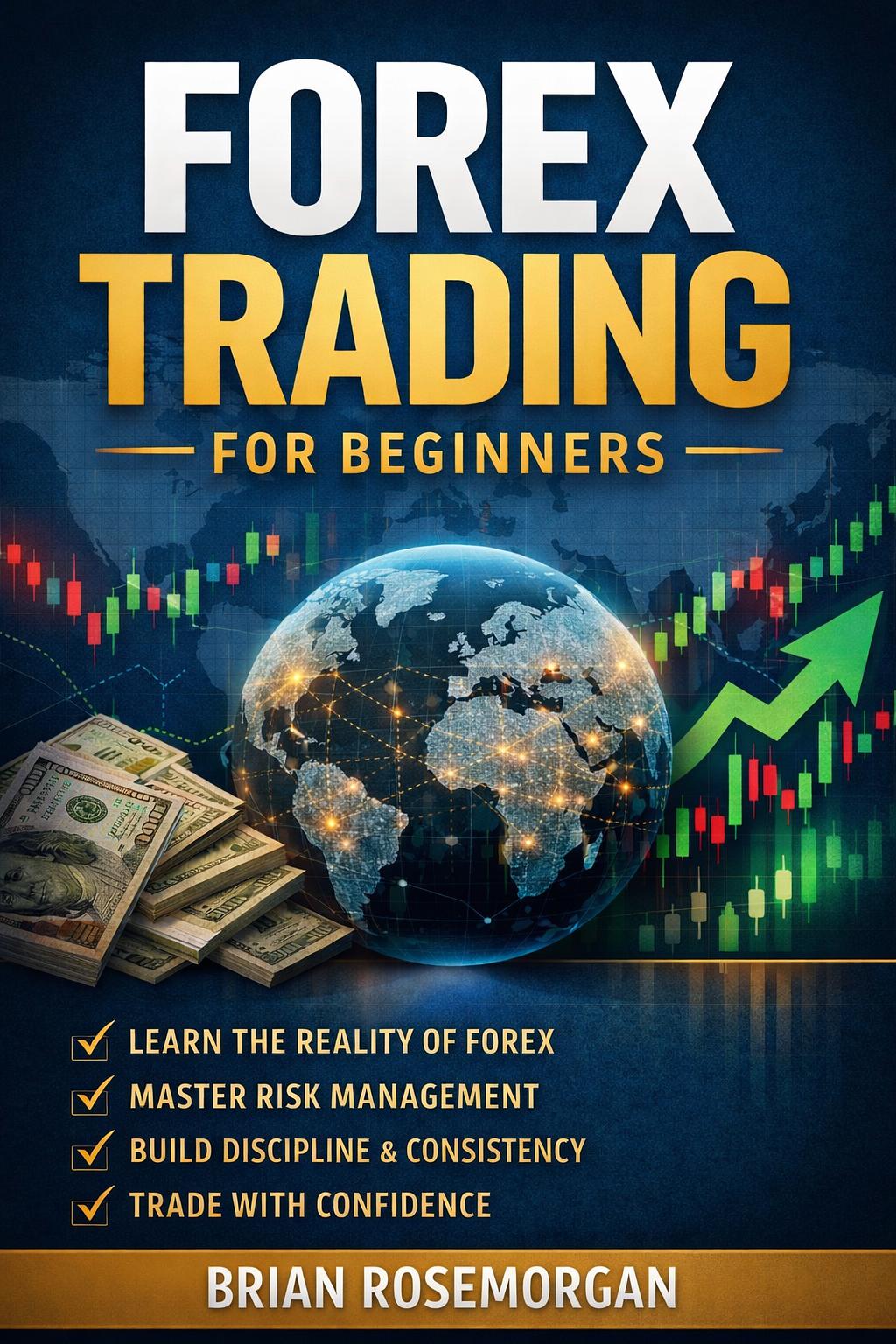
If you’ve enjoyed this free Academy, my book brings everything together in one structured beginner-friendly guide. It’s the perfect companion to the lessons you’ll complete here on trybuying.
🎉 Lesson Complete
Congratulations! You have completed
Lesson 3 – How to Start Forex Trading.
Click below to record your progress and return to Module 1.
✓ Complete Lesson & Return to Module 1
Your progress will be saved automatically. Return to the Academy and continue with your next lesson whenever you’re ready.
Disclaimer: Forex trading and CFDs involve significant risk and may not be suitable for every investor. The information provided on this website is for educational purposes only and should not be considered financial, investment, or trading advice. Always verify that your broker is properly regulated before depositing funds, and practice on a demo account before trading with real money. Never risk money you cannot afford to lose. Past performance does not guarantee future results. Please read our full Risk Disclosure