

Brian Rosemorgan
Retired Professional Trader | 8+ Years Experience | South Africa
Questions?
Trading in Forex: A Complete Beginner’s Guide
What Is Forex Trading?
Forex trading, short for foreign exchange trading, is the decentralized global market where all the world’s currencies are exchanged. Unlike traditional stock exchanges that operate out of centralized physical buildings like Wall Street, the forex market functions electronically around the clock across a global network of financial institutions, commercial banks, brokers, and retail speculators.
At its core, trading forex involves simultaneously buying one currency while selling another. Currencies are always quoted in pairs—such as the EUR/USD or GBP/USD—because the value of any single currency can only be measured relative to the value of a counter currency. driven by global economic data, interest rates, and geopolitical shifts.
Throughout this lesson, you will learn the foundational mechanics of how currency exchange works, understand how quotes and spreads are structured, and learn why approaching the forex market with realistic expectations and strict risk parameters is vital for capital preservation before you ever risk real money.
1. How the Forex Market Works
Unlike centralized stock markets, the forex market has no single central physical exchange. Trading takes place over the counter (OTC) through a global network of banks, financial institutions, brokers and other participants.
.
For a retail trader, the process begins by placing a buy or sell order through a forex broker on a currency pair. A currency pair compares the value of one currency against another, such as EUR/USD or USD/ZAR. The first currency is called the base currency, while the second is the quote currency. The exchange rate tells you how much of the quote currency is needed to buy one unit of the base currency.
When you buy a pair, you are expecting the base currency to rise relative to the quote currency; when you sell, you are expecting the base currency to fall relative to the quote currency.
The trade gains or loses value as the exchange rate moves. Currency prices can be influenced by factors such as interest rates, inflation, economic data and geopolitical events.
This decentralised structure allows the forex market to operate 24 hours a day, five days a week, across major financial centres from Sydney to New York.
2. Understanding Forex Currency Pairs
Forex currencies are always traded in pairs because the value of one currency is measured against another. A currency pair shows the exchange rate between the two currencies and consists of a base currency and a quote currency.
The base currency is the first currency listed, while the quote currency is the second. For example, if EUR/USD is trading at 1.1000, it means that one euro is worth 1.10 US dollars. When you buy EUR/USD, you are buying euros and selling US dollars. When you sell EUR/USD, you are selling euros and buying US dollars.
Forex currency pairs are generally grouped into three categories. . Minor pairs, also called crosses, combine major currencies without the US dollar, such as EUR/GBP. ExMajor pairs include the US dollar and another major global currency, such as EUR/USD or USD/JPY. They are among the most actively traded currency pairs and generally have high liquidity and relatively competitive spreads.otic pairs combine a major currency with the currency of an emerging or smaller economy and can have wider spreads and lower liquidity.
Understanding how currency pairs are quoted and how buying and selling works is essential before moving on to concepts such as pips, spreads and leverage.
3. Major, Minor, and Exotic Currency Pairs
Trading pairs are commonly grouped into three categories based on factors such as liquidity and trading volume.
Major pairs include the US Dollar paired with another major global currency, such as EUR/USD, GBP/USD or USD/JPY. Major pairs are among the most actively traded currency pairs and generally have high liquidity and relatively tight spreads, which can make their trading costs more competitive.
Minor pairs, also called crosses, do not include the US Dollar. They combine two other major currencies, such as EUR/GBP, EUR/AUD or GBP/JPY. Minor pairs generally have lower liquidity than the major pairs, which can result in wider spreads and higher trading costs.
Exotic pairs combine a major currency with the currency of an emerging or smaller economy, such as USD/ZAR, USD/TRY or USD/MXN. These pairs generally have lower liquidity and wider spreads than major pairs and can also experience greater price volatility. For South African traders, USD/ZAR is an important example because it involves the South African rand.
Understanding the differences between major, minor and exotic currency pairs can help beginners consider factors such as liquidity, spreads and volatility when deciding which currency pairs to study or practise with.
4. What Are Pips and Spreads
A pip is a standard unit used to measure price movement in most forex currency pairs. For most pairs, one pip is equal to 0.0001. For example, if EUR/USD moves from 1.1050 to 1.1051, the exchange rate has moved by one pip.
For currency pairs involving the Japanese yen, one pip is normally equal to 0.01. For example, if USD/JPY moves from 150.20 to 150.21, the pair has moved by one pip. Some brokers also quote prices in fractional pips, known as pipettes, which provide an additional decimal place for greater pricing precision.
The spread is the difference between the bid and ask price of a currency pair and is normally measured in pips. For example, if the bid is 1.1049 and the ask is 1.1050, the spread is 1 pip. The spread is one of the trading costs a trader needs to consider because it represents the difference between the available selling and buying prices.
Some brokers may also charge a separate commission, depending on the type of trading account.
Understanding pips and spreads is important because even relatively small price movements and trading costs can affect the profit or loss of a forex trade.
5. How Forex Leverage and Margin Work
Leverage allows retail traders to control a larger market position with a relatively small amount of their own capital. Margin is the amount of money required by the broker to open and maintain a leveraged position.
Leverage is expressed as a ratio. For example, with 10:1 leverage, $100 of margin could provide exposure to a $1,000 position. The higher the leverage available, the smaller the margin requirement needed to control a particular position size.
However, the profit or loss on a leveraged trade is based on the full position exposure, not simply the amount of margin used. This means leverage can increase potential profits, but it can also magnify losses if the market moves against the trader.
If losses reduce the account’s available equity to a level where the broker’s margin requirements are no longer met, the trader may receive a margin call or positions may be closed automatically, depending on the broker’s rules and the trading product.
Leverage therefore increases the importance of disciplined risk management and proper position sizing. Beginners should understand how much they can lose on a trade, how margin works and what their broker’s margin and close-out rules are before trading with real money.
💡 Brian’s Expert Advice
When I first encountered leverage, I thought it was a shortcut to fast wealth. In reality, over-leveraging is the fastest way to wipe out a trading account. Treat leverage as a dangerous tool rather than free money. Always calculate your risk per trade based on your total account equity, and never let a single bad market session compromise your financial stability.
| Key Feature | What You Need to Know | Actionable Takeaway |
|---|---|---|
| Market Hours | Open 24 hours a day, five days a week across global sessions. | Plan your trading schedule around high-liquidity market overlaps. |
| Currency Quotation | Traded in pairs consisting of a base currency and a quote currency. | Always verify which currency you are buying and selling before executing. |
| Leverage Risk | Increases market exposure relative to the trader’s available capital. | Keep leverage low and focus strictly on disciplined risk management rules. |
Frequently Asked Questions
1. What Is Forex Trading and How Does It Work
Forex trading is the buying and selling of currencies in the global foreign exchange market, with the aim of making a profit from changes in exchange rates. Because currencies are traded against each other, forex is always quoted in pairs, such as EUR/USD, GBP/USD or USD/ZAR.
The first currency in a pair is called the base currency, while the second is the quote currency. For example, in EUR/USD, EUR is the base currency and USD is the quote currency. If you believe the euro will increase in value against the US dollar, you can buy EUR/USD. If you believe the euro will fall against the US dollar, you can sell the pair.
Forex trading is carried out through brokers that provide access to the market through trading platforms. Unlike a traditional stock exchange, forex is a decentralised, over-the-counter (OTC) market, meaning there is no single central exchange where all currency transactions take place. Trading activity takes place through a global network of banks, financial institutions, companies and other market participants.
The forex market operates across major financial centres around the world and is generally available 24 hours a day, five days a week. This allows traders to participate during different market sessions, including the Asian, London and New York sessions.
When you open a forex trade, your profit or loss depends on how the exchange rate moves between the price at which you enter the trade and the price at which you close it. For example, if you buy EUR/USD and the pair rises, the trade may produce a profit. If the pair falls, the trade may produce a loss.
Understanding currency pairs, buying and selling, pips, spreads and leverage is therefore essential before trading forex with real money. Beginners should first learn how these concepts work, practise on a demo account and understand the risks before putting their own money at risk.
2. Who Are the Main Participants
Currencies are always traded in pairs because the value of one currency is measured against another currency. Unlike a product that can have a price expressed in rand or dollars, a currency’s exchange value depends on what another currency is worth at the same time.
Every forex transaction therefore involves two currencies. When you exchange one currency, you are simultaneously giving up or selling another. This creates a currency pair such as EUR/USD, GBP/USD or USD/ZAR.
A currency pair has two parts. The first currency is the base currency, and the second currency is the quote currency. The exchange rate tells you how much of the quote currency is needed to buy one unit of the base currency.
For example, if EUR/USD is quoted at 1.1000, it means that one euro is worth 1.10 US dollars. In this example, EUR is the base currency and USD is the quote currency.
When you buy EUR/USD, you are buying euros and selling US dollars because you expect the euro to increase in value relative to the US dollar. When you sell EUR/USD, you are selling euros and buying US dollars because you expect the euro to decrease in value relative to the US dollar.
The price of a currency pair therefore reflects the relative strength of the two currencies. If the exchange rate changes, the value of a forex position can change as well, creating either a profit or a loss.
Understanding currency pairs is one of the first concepts beginners need to learn because every forex trade involves one currency being exchanged against another.
Commercial and investment banks are among the largest participants in the forex market. They trade currencies with other financial institutions and provide foreign exchange services to companies, investors and other clients. Their activity contributes significantly to market liquidity.
Central banks manage monetary policy and may participate in foreign exchange markets as part of managing their country’s currency reserves or implementing monetary policy. Their interest rates and other policy decisions can also influence currency values.
Institutional investors, including investment funds, pension funds and hedge funds, trade currencies when managing international investments or seeking returns from changes in exchange rates. Their large transactions can contribute to significant market activity.
Multinational companies use the forex market when they need to exchange currencies for international business. For example, a South African company importing goods from the United States may need to exchange South African rand for US dollars. Companies may also use foreign exchange transactions to manage currency risk.
Retail traders are individual traders who access the forex market through retail brokers. They generally speculate on currency price movements rather than exchanging currencies for international business purposes. A broker provides the trading platform and access to the market, while the retail trader decides whether to buy or sell a currency pair.
Understanding these different participants helps beginners see that the forex market is much larger than individual traders. Retail traders are only one part of a global market involving financial institutions, businesses, governments and investors.
3. Why Are Currencies Always Traded in Pairs?
Currencies are always traded in pairs because the value of one currency is measured against another currency. Unlike a product that can have a price expressed in rand or dollars, a currency’s exchange value depends on what another currency is worth at the same time.
Every forex transaction therefore involves two currencies. When you exchange one currency, you are simultaneously giving up or selling another. This creates a currency pair such as EUR/USD, GBP/USD or USD/ZAR.
A currency pair has two parts. The first currency is the base currency, and the second currency is the quote currency. The exchange rate tells you how much of the quote currency is needed to buy one unit of the base currency.
For example, if EUR/USD is quoted at 1.1000, it means that one euro is worth 1.10 US dollars. In this example, EUR is the base currency and USD is the quote currency.
When you buy EUR/USD, you are buying euros and selling US dollars because you expect the euro to increase in value relative to the US dollar. When you sell EUR/USD, you are selling euros and buying US dollars because you expect the euro to decrease in value relative to the US dollar.
The price of a currency pair therefore reflects the relative strength of the two currencies. If the exchange rate changes, the value of a forex position can change as well, creating either a profit or a loss.
Understanding currency pairs is one of the first concepts beginners need to learn because every forex trade involves one currency being exchanged against another.
4. What Is a Pip in Forex Trading?
A pip is a standard unit used to measure changes in the exchange rate of a forex currency pair. The term is commonly used by traders and brokers to describe how far a currency pair has moved and to help measure potential profits and losses.
For most currency pairs, one pip is equal to the fourth decimal place, or 0.0001. For example, if EUR/USD moves from 1.1050 to 1.1051, the pair has moved 1 pip. If it moves from 1.1050 to 1.1060, that is a movement of 10 pips.
Currency pairs involving the Japanese yen are normally quoted differently. For USD/JPY, for example, one pip is generally equal to the second decimal place, or 0.01. If USD/JPY moves from 150.20 to 150.21, that is a movement of 1 pip.
Many modern trading platforms display an additional decimal place. This fractional price movement is commonly called a pipette, and it represents one-tenth of a pip. For example, a EUR/USD quote may be displayed as 1.10505, where the final digit represents a fraction of a pip.
Pips are important because the size of a price movement, combined with the size of a trading position, affects the profit or loss on a forex trade. A movement of 20 pips can therefore have a very different monetary impact depending on the position size being traded.
Beginners should understand pips before trading with real money because they provide a simple way to measure currency price movements and understand how those movements can affect a trading position.
5. What Is Leverage and How Does It Affect Risk?
Leverage allows a trader to control a larger forex position using a smaller amount of their own capital. It is usually expressed as a ratio, such as 10:1, 30:1 or 100:1. For example, with 30:1 leverage, a trader may be able to control a position worth $30,000 using $1,000 of available margin, subject to the broker’s requirements and the trading product.
Leverage does not make the underlying market movement smaller. Instead, it means that a relatively small amount of your own capital is supporting a much larger trading position. As a result, a price movement against the position can produce a much larger loss relative to the trader’s account balance. Regulators warn that leverage can magnify both potential gains and losses in forex trading.
For example, if a trader controls a $10,000 position and the market moves 1% against the position, the loss would be approximately $100 before trading costs. If only $500 of the trader’s capital was being used as margin to support that position, the $100 loss would represent 20% of that margin.
This is why high leverage can make it possible for a beginner’s account to lose money quickly, even when the underlying currency pair has moved by a relatively small amount. Depending on the broker, product and applicable rules, a sufficiently large loss can reduce available margin and may result in a margin call or the broker closing an open position.
Leverage should therefore be treated as a risk-management issue, not a shortcut to making larger profits. Beginners should understand position size, margin, stop-losses and the amount they are prepared to risk before using leverage with real money.
The amount of leverage available to retail traders can also depend on the broker, the financial product and the regulations that apply in the relevant jurisdiction. Rules for leveraged retail products can include leverage limits and margin close-out requirements.
6. How Do Brokers Make Money on Forex Trades?
Forex brokers can make money from the costs associated with providing access to the forex market. The most common sources include spreads, commissions and overnight financing or swap charges, although the exact fees and pricing model vary between brokers and account types.
The spread is the difference between the bid price, which is the price at which you can sell, and the ask price, which is the price at which you can buy. For example, if a broker quotes EUR/USD at 1.1050 bid and 1.1052 ask, the difference is 2 pips. This spread is one of the costs a trader may pay when entering a trade.
Some brokers offer very low or variable spreads but charge a separate commission on trades. This is common with certain raw-spread or commission-based accounts. A broker may therefore advertise a very low spread while charging a separate fee based on the size of the position.
A trader may also pay or receive an overnight financing or swap charge when a leveraged position is held open beyond the broker’s daily trading period. The amount can depend on the currency pair, position size, interest-rate differentials and the broker’s terms.
Brokers can also operate under different execution and dealing models. Some may pass client trades to external liquidity providers, while others may act as the counterparty to some or all client trades. The way a broker executes and manages client orders can therefore differ between firms.
For beginners, the important point is that the spread is not necessarily the only cost of trading. When comparing forex brokers, look at the total trading cost, including spreads, commissions, overnight charges and any other applicable fees. Always check the broker’s current terms and regulatory status before depositing money.
7. Is Forex Trading Legal in South Africa?
Yes, forex trading is legal in South Africa for individuals trading their own money. However, being legal does not mean that every forex broker, trading service or investment opportunity is authorised or legitimate.
The Financial Sector Conduct Authority (FSCA) regulates financial services providers in South Africa. Before depositing money with a broker or financial-services provider, South African traders should check its current regulatory status and confirm that the services it offers are authorised under the applicable financial-sector laws.
South African traders should also be aware of the role of the South African Reserve Bank (SARB) and its Financial Surveillance Department. Exchange-control rules apply to certain cross-border transactions. SARB’s current guidelines specifically cover South African residents funding online international trading accounts with registered brokers and set out the applicable requirements for using foreign-exchange allowances and authorised banking channels.
SARS may also have tax implications for income or gains from trading. The tax treatment can depend on the individual’s circumstances and the nature of the trading activity, so traders should not assume that forex profits are automatically tax-free. South African tax residents are generally subject to tax on worldwide income, subject to the applicable rules and exclusions.
For beginners, the important point is that legal does not automatically mean safe. Before opening an account, verify the broker’s current regulatory status, understand where the broker is regulated, check the costs and risks of the trading product, and understand the rules that apply to moving money into and out of South Africa.
Regulatory information and exchange-control requirements can change, so always check the current information directly with the FSCA, SARB and SARS before making financial decisions.
Can Beginners Trade Forex Profitably Without Experience?
Yes, a beginner can occasionally execute a profitable forex trade without prior experience, but consistent, long-term profitability is impossible without mastering market mechanics, practicing risk management, and following a disciplined trading plan.
While luck can produce a winning trade, relying on chance without foundational knowledge typically leads to rapid capital loss.
Why Inexperienced Trading Fails
-
Guesswork Instead of Strategy: Without a defined trading plan, trading becomes indistinguishable from gambling, leaving outcomes entirely to chance.
-
Misunderstanding Leverage: Beginners frequently underestimate how high leverage magnifies losses, allowing small market movements to wipe out an account instantly.
-
Emotional Overreactions: Unexperienced traders often react emotionally when prices move against them—leading to revenge trading, holding losing positions too long, or cutting winning trades too early.
The Safe Approach for New Traders
-
Master the Basics First: Learn the core fundamentals, including pips, spreads, lot sizes, and how major market sessions operate.
-
Build Discipline on a Demo Account: Practice your strategy in a risk-free environment until your data shows a consistent edge.
-
Enforce Strict Risk Rules: Protect your capital by risking no more than 1% per trade, ensuring a single bad position cannot destroy your account.
The Reality Check: Even professional, experienced traders face losing trades regularly. Beginners should focus entirely on education, capital preservation, and consistency rather than seeking quick profits.
9. What Is the Best Way to Practice Forex Trading Risk-Free?
The best way for a beginner to practise forex trading without risking real money is to use a demo trading account, also known as a practice or paper-trading account. A demo account provides virtual funds so you can practise buying and selling currency pairs without putting your own money at risk.
A demo account allows you to become familiar with a trading platform and practise important trading skills. You can learn how to place market orders, set stop-loss and take-profit orders, calculate position sizes and manage open trades while watching how prices move in real market conditions.
Demo trading can also be used to test a trading strategy before using it with real money. You can practise with different currency pairs and learn how factors such as spreads, leverage, margin and price movements affect the outcome of a trade.
However, demo trading is not exactly the same as trading with real money. Because you are using virtual funds, you do not experience the same emotional pressure that can occur when your own money is at risk. Trading conditions, execution and costs may also differ between a demo and live account.
For beginners, the purpose of demo trading should be to learn the platform, practise a trading plan and develop good risk-management habits before considering real-money trading. Making a profit on a demo account does not guarantee that you will make a profit on a live account.
Demo trading can remove the financial risk while you are practising, but real-money forex trading itself cannot be made completely risk-free.
More Useful Sections
🛠 Brokers to Consider for Demo Trading
If you are learning forex risk management, I recommend starting with a demo account rather than rushing into live trading. When comparing brokers, look beyond advertised spreads and consider regulation, commissions, execution, platform availability, withdrawal conditions and customer support.
The brokers below are included because they offer demo-trading options. This section contains affiliate links, so I may receive a commission if you open an account through one of the links. This does not mean that either broker is suitable for every trader. Always research the broker yourself and verify its current regulatory status and trading conditions before opening an account.
XM
✔ Demo account available
✔ MT4 & MT5
✔ Multiple account options
✔ Educational resources
An option to investigate if you want to practise trading on demo while comparing its costs, platforms and account conditions with other brokers.
AvaTrade
✔ Demo account available
✔ MT4 & MT5
✔ AvaTradeGO platform
✔ Educational resources
Another option to investigate if you want to compare platforms, trading conditions and educational resources while practising on demo.
Important: Spreads, commissions, leverage and other trading conditions can change. Always check the broker’s current terms, costs, regulation and withdrawal requirements before opening an account.
📘 Forex Trading for Beginners
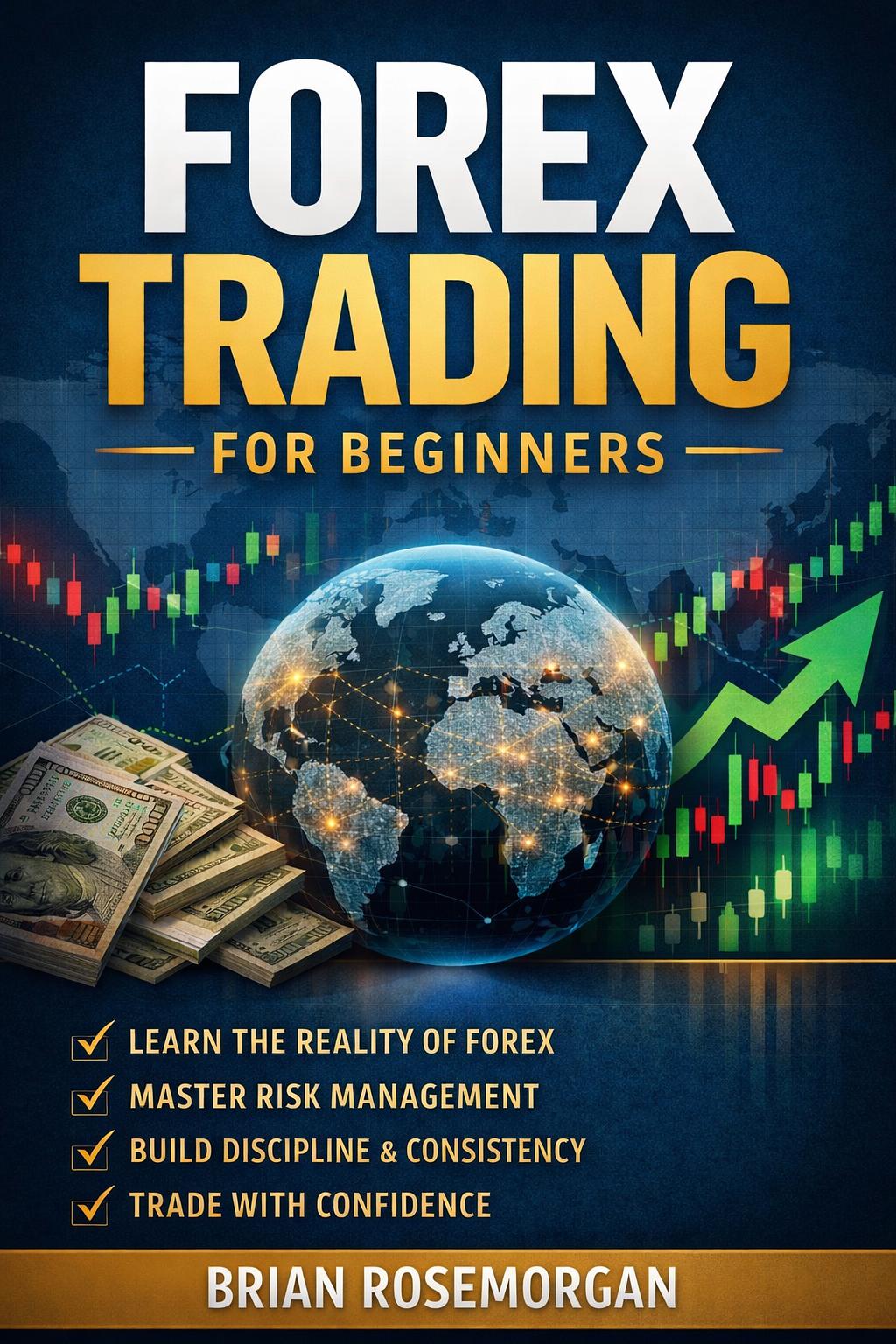
If you’ve enjoyed this free Academy, my book brings everything together in one structured beginner-friendly guide. It’s the perfect companion to the lessons you’ll complete here on trybuying.
🎉 Lesson Complete
Congratulations! You have completed
Lesson 2 – What Is Forex Trading?
Click below to record your progress and return to Module 1.
✓ Complete Lesson & Return to Module 1
Your progress will be saved automatically. Return to the Academy and continue with your next lesson whenever you’re ready.
Disclaimer: Forex trading and CFDs involve significant risk and may not be suitable for every investor. The information provided on this website is for educational purposes only and should not be considered financial, investment, or trading advice. Always verify that your broker is properly regulated before depositing funds, and practice on a demo account before trading with real money. Never risk money you cannot afford to lose. Past performance does not guarantee future results. Please read our full Risk Disclosure