
Updated August 2026

Brian Rosemorgan
Retired Professional Trader | 8+ Years Experience | South Africa
Questions?
Can Forex Be Self-Taught?
Can You Teach Yourself Forex Trading?
Yes, forex trading can be entirely self-taught. You do not need to attend an expensive classroom course or pay for a private mentor to learn the fundamentals. With the right educational material, patience, and plenty of practice, a beginner can gradually develop a working understanding of how the global foreign exchange market operates.
However, self-teaching should not be confused with simply watching a few online videos and immediately opening a live account. Successful self-education requires structural discipline, risk management, and mastery of market mechanics before putting real money at risk.
Step-by-Step Blueprint to Self-Teaching Forex
1. Master the Core Terminology & Mechanics
Before analyzing charts, you must understand the foundational language of the foreign exchange market:
-
Currency Pairs: Understanding how currencies are quoted and traded in relation to one another (e.g., EUR/USD, where you buy the base currency and sell the quote currency).
-
Pips and Spreads: Measuring price movements in pips (percentage in point) and factoring in the broker’s spread (the transaction cost between the bid and ask price).
-
Leverage and Margin: Comprehending how borrowed capital amplifies both potential profits and catastrophic losses.
-
Reliable Roadmaps: Use trusted free self-paced educational resources like BabyPips (School of Pipsology), IG Academy, or FX Academy to build this foundation systematically.
2. Study Market Analysis Frameworks
Once you grasp the definitions, learn how to read market direction through two distinct lenses:
-
Technical Analysis: Reading price charts, identifying trends, understanding support and resistance levels, and utilizing technical indicators (e.g., moving averages, RSI).
-
Fundamental Analysis: Monitoring global macroeconomic news, central bank interest rate decisions, inflation reports, and geopolitical events that drive long-term currency valuations.
3. Practice Strategically with a Demo Account
-
Risk-Free Environment: Open a demo account with a strictly regulated broker. Test your platform mechanics, order types (market orders, limit orders, stop-losses), and initial strategies using virtual currency.
-
The Demo Trap: Treat your demo account like real money. Many beginners fail when transitioning to live accounts because they take reckless risks on demo that they would never take with actual capital.
4. Build a Strict Risk Management & Psychological Routine
-
Capital Preservation First: Never risk more than 1% to 2% of your total account balance on a single trade.
-
Automated Protection: Always attach stop-loss limits to your orders before entering the market to protect against unexpected volatility.
-
Trading Journaling: Document every trade, your emotional state, and the technical setup. Reviewing your performance weekly helps eliminate recurring psychological pitfalls like revenge trading or chasing losses.
“Successful self-teaching is measured by preparation, not speed. Build your competence in a simulated environment first so that your capital survives long enough for your experience to compound.”
However, self-teaching should not be confused with simply watching a few trading videos and immediately opening a live account. Successful learning requires an understanding of currency pairs, charts, technical analysis, risk management, trading psychology and the dangers of leverage. The objective is to bui2. Learn Technical Analysis Step by Step
Technical analysis helps traders study price movement using charts and indicators. Start with simple concepts such as support and resistance, trends, trendlines, candlestick patterns and moving averages. You do not need dozens of indicators. Concentrate on understanding a small number of useful tools and how they can be combined into a clear trading method.
3. Make Risk Management Part of Your Education
Risk management should be learned before you begin risking real money. Understand position sizing, stop-loss orders, leverage and the importance of limiting the amount you can lose on one trade. A trading strategy can produce losing trades, so protecting your account is just as important as finding potential entries.
4. Practise What You Learn on a Demo Account
A demo account provides a useful environment for practising your knowledge without immediately risking your savings. Use the demo account seriously. Follow your trading rules, record your trades and review your mistakes. The purpose is not to produce unrealistic demo profits but to develop good habits and gain practical experience.
5. Develop Your Own Trading Discipline
Self-taught traders must take responsibility for their own decisions. This means avoiding revenge trading, excessive trading and constantly changing strategies after a losing trade. Keep a trading journal and review your results regularly. Over time, disciplined practice can help you identify weaknesses and improve your decision-making process.
💡 Brian’s Expert Advice
I believe forex can absolutely be self-taught because that is largely how I developed my own trading knowledge. But there is an important difference between learning about forex and becoming a disciplined trader.
When I first started trading, I made many mistakes. I tried different strategies and learned through experience that trading more often does not necessarily make you a better trader. My advice to beginners is to slow the process down. Learn one subject at a time, practise on demo, control your risk and keep a record of what you are doing.
You do not need to know everything about forex before you start learning. You simply need to build your knowledge in the correct order and avoid risking money while you are still learning the basics.
| Key Feature | What You Need to Know | Actionable Takeaway |
|---|---|---|
| Forex Fundamentals | Understanding the basic terminology and mechanics of forex provides the foundation for further learning. | Learn the basics before concentrating on trading strategies. |
| Demo Practice | Demo trading allows beginners to practise without immediately risking real trading capital. | Treat demo trading seriously and follow the rules you would use on a live account. |
| Risk Management | Losses are part of trading, making capital protection an essential part of learning forex. | Always decide your risk before entering a trade. |
Frequently Asked Questions
1. Can forex trading really be self-taught?
Yes. Beginners can learn the fundamentals of forex independently using educational websites, books, videos and structured practice. However, learning about forex does not guarantee trading success. You still need to develop practical skills, risk management rules, discipline and an understanding of the risks involved before considering live trading.
2
How Do I Teach Myself Forex Trading?
You can teach yourself forex trading by following a structured learning process rather than trying to learn everything at once. The internet contains a huge amount of forex information, but the quality varies considerably, so beginners should concentrate on understanding the fundamentals, risk management and practical trading mechanics before looking for more advanced strategies.
A useful starting point is learning how forex works. Understand currency pairs, base and quote currencies, pips, spreads, bid and ask prices, trading sessions and how a forex trade is opened and closed. You should also understand how brokers, trading platforms and different types of orders work.
Once you understand the basic mechanics, learn risk management before concentrating heavily on strategies. This includes position sizing, stop-losses, risk-reward ratios, leverage, margin and drawdown. Knowing how to enter a trade is only one part of trading; you also need to understand how much you could lose if the market moves against you.
You can then learn how to read a forex chart and study the two main approaches to market analysis: technical analysis and fundamental analysis. A beginner does not need to master every indicator or economic concept. It is usually more useful to understand a small number of tools properly than to collect dozens of indicators without knowing how to use them.
After learning the basics, choose one simple trading approach to study. Trying a different strategy every few days makes it difficult to determine whether a strategy works or whether the trader simply has not given it enough consistent practice.
A demo account can then be used to practise the strategy without immediately risking real money. Treat the demo account as training rather than a game. Follow the same entry, exit and risk-management rules you would intend to use with a live account.
Keeping a trading journal is another important part of self-learning. Record why you entered each trade, where you placed your stop-loss and target, what happened afterwards and whether you followed your rules. Over time, this can help you identify repeated mistakes and distinguish a problem with your process from a normal losing trade.
You should also learn about trading psychology. Fear, greed, impatience and the desire to recover losses can cause traders to abandon their plans. Developing discipline means following predefined rules even when an individual trade does not produce the result you expected.
Avoid constantly changing strategies because of a few losing trades. Every strategy will have losing trades, and changing approaches repeatedly can prevent you from collecting enough information to evaluate your results properly.
A practical self-learning progression is:
Learn how forex works → learn risk management → learn chart reading and analysis → choose one trading approach → practise on a demo account → keep a trading journal → review your results → improve your process.
Teaching yourself forex does not mean you have to reject all outside help. Reputable books, educational websites, experienced traders and structured learning programmes can all provide useful information. The important point is to compare information carefully and avoid treating promises of easy or guaranteed profits as education.
Most importantly, learning forex and becoming consistently profitable are two different things. You can learn the mechanics of forex through study and practice, but trading real money introduces financial risk and requires you to manage uncertainty and your own behaviour.
For a beginner, the objective of self-learning should therefore be to build knowledge and trading discipline before putting significant real money at risk, rather than trying to find the fastest possible route to making a profit.
3. Can I learn forex trading for free?
Yes. There are many free resources available online for learning forex fundamentals, technical analysis and risk management. Free education can provide a strong foundation, but information alone is not enough. You need to practise what you learn and develop the discipline required to follow your trading rules.
4. How long does it take to teach yourself forex?
There is no guaranteed period in which someone becomes a competent trader. The time required depends on how much you study, practise and review your decisions. Avoid trying to become profitable within a fixed number of weeks or months. Focus instead on building knowledge and developing consistent trading habits.
5. Do I need a forex mentor?
No, a mentor is not essential for learning the fundamentals of forex. A good mentor can provide guidance and help identify mistakes, but independent traders can also learn through structured education, careful research, demo practice and maintaining a detailed trading journal.
6. Should I start with a demo account?
Yes. A demo account is an important training tool for beginners because it allows you to practise using a trading platform without immediately risking real money. Use demo trading to test your understanding, practise your strategy and develop good trading habits before considering whether live trading is appropriate.
7. What should I learn first in forex?
Begin with currency pairs, pips, spreads, lots, leverage, margin and market sessions. Once you understand those basics, move on to charts, trends, support and resistance, candlestick patterns, moving averages and risk management. Learning these subjects in order can make the process much easier for a beginner.
8. Can self-taught forex traders become profitable?
It is possible for a self-taught trader to develop a profitable trading approach, but there are no guarantees. Forex trading involves significant risk and losing trades are unavoidable. Concentrate on developing a repeatable process, controlling risk and improving your decision-making rather than expecting every trade to be profitable.
9. What is the biggest mistake when learning forex alone?
One of the biggest mistakes is trying to learn everything at once or constantly jumping between strategies. Beginners can become overwhelmed by conflicting information. A better approach is to follow a structured learning path, practise one concept at a time and only move forward when you understand the previous lesson.
🛠 Brokers to Consider for Demo Trading
If you are teaching yourself forex, I recommend starting with a demo account rather than rushing into live trading. When comparing brokers, look beyond advertised spreads and consider regulation, commissions, execution, platform availability, withdrawal conditions and customer support.
The brokers below are included because they offer demo-trading options. This section contains affiliate links, so I may receive a commission if you open an account through one of the links. This does not mean that either broker is suitable for every trader. Always research the broker yourself and verify its current regulatory status and trading conditions before opening an account.
XM
✔ Demo account available
✔ MT4 & MT5
✔ Multiple account options
✔ Educational resources
An option to investigate if you want to practise trading on demo while comparing its costs, platforms and account conditions with other brokers.
AvaTrade
✔ Demo account available
✔ MT4 & MT5
✔ AvaTradeGO platform
✔ Educational resources
Another option to investigate if you want to compare platforms, trading conditions and educational resources while practising on demo.
Important: Spreads, commissions, leverage and other trading conditions can change. Always check the broker’s current terms, costs, regulation and withdrawal requirements before opening an account.
📘 Forex Trading for Beginners
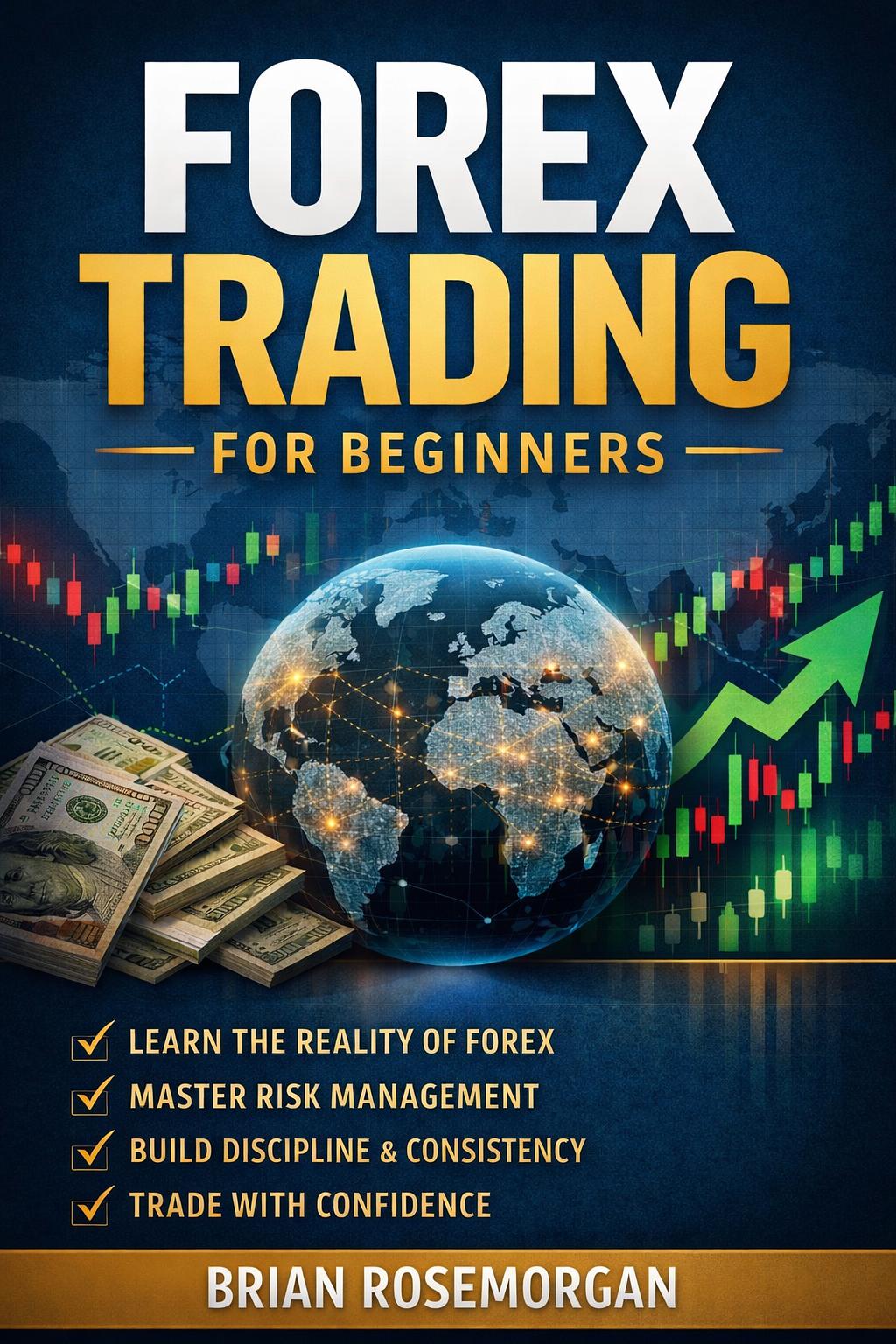
If you’ve enjoyed this free Academy, my book brings everything together in one structured beginner-friendly guide. It’s the perfect companion to the lessons you’ll complete here on TryBuying.
Disclaimer: Forex trading and CFDs involve significant risk and may not be suitable for every investor. The information provided on this website is for educational purposes only and should not be considered financial, investment, or trading advice. Always verify that your broker is properly regulated before depositing funds, and practise on a demo account before trading with real money. Never risk money you cannot afford to lose. Past performance does not guarantee future results. Please read our full Risk Disclosure.