
Updated September 2026
Brian Rosemorgan
Retired Professional Trader | 8+ Years Experience | South Africa
Questions?
Forex Broker Red Flags: How to Spot Scams Before They Take Your Money
Choosing a forex broker is one of the most important decisions a beginner makes. Before you compare spreads, leverage or trading platforms, you need to establish who you are dealing with, what legal entity will provide the service and how your money will be handled.
The difficult part is that a suspicious broker or fraudulent trading operation does not necessarily look suspicious. A website can have professional graphics, trading charts, customer testimonials, live-chat support and impressive-looking regulatory claims. Someone contacting you through WhatsApp, Telegram, Facebook or another social-media platform can also sound knowledgeable and convincing.
That is why appearance should never replace verification. A professional website is not proof of authorisation, and a person who sounds like an experienced trader is not automatically someone you should trust with your money.
For a beginner, the safer approach is to slow the process down and check several things independently: the company’s legal identity, its regulatory status, the entity that will provide your account, the payment destination, the withdrawal procedure and the way the company communicates with you.
For South African traders, regulatory checks are particularly important. The Financial Sector Conduct Authority (FSCA) provides an official search facility for authorised financial service providers. You can search using an FSP number or part of the FSP name. Do not simply accept a broker’s statement that it is “FSCA regulated”; verify the relevant details independently.
The FSCA has also published warnings involving unrealistic returns, urgent payment demands, impersonation of authorised firms, upfront payments and requests for additional money before investments are returned. These examples show why beginners should verify a financial service provider rather than relying on appearance, social-media activity or promises. :contentReference[oaicite:1]{index=1}
Common forex broker warning signs include guaranteed profits, unrealistic returns, high-pressure sales, withdrawal problems, misleading regulation claims, clone companies, unusual payment requests and demands for passwords or security codes.
One warning sign by itself does not necessarily prove that a company is fraudulent. However, several warning signs appearing together should make you stop the process and investigate before sending any money.
What Does a Forex Broker Scam Look Like?
A forex scam does not always begin with an obvious request for a large amount of money. It may begin with a friendly conversation, a social-media advertisement, a trading course, a free signal group or an offer to help you open a trading account.
The person may initially encourage you to deposit a relatively small amount. Once the relationship has been established, you may be encouraged to deposit more because the account is supposedly performing well or because a particular trading opportunity is described as urgent.
Problems can become apparent when you attempt to withdraw your money. You may suddenly be told that you need to pay an additional fee, tax, insurance amount, release charge or other payment before your withdrawal can be processed.
This is why broker safety should be considered before depositing rather than only after something goes wrong.
The key lesson for a beginner is simple:
Verify first. Deposit second.
1. Guaranteed Profits and Unrealistic Returns
One of the clearest warning signs is a promise that you are guaranteed to make money from forex trading. Forex and CFD trading involve market risk, and no legitimate trading arrangement can remove that risk by promising a particular return.
Be particularly cautious when someone advertises fixed daily or monthly profits, unusually high returns, “zero-risk” trading or a system that supposedly cannot lose.
Statements such as “guaranteed profits”, “you cannot lose”, “risk-free forex” or “we will recover all your losses” should make you stop and investigate rather than encourage you to deposit more money.
The FSCA has repeatedly warned the public about unrealistic or exaggerated returns in connection with unauthorised investment offers. Its published warnings also identify unrealistic returns as a danger sign. :contentReference[oaicite:2]{index=2}
A beginner can also confuse a broker with somebody selling an investment opportunity. A broker provides access to trading products and infrastructure. That is different from a person promising that they can produce a guaranteed return on your capital.
Your trading results depend on market conditions, position size, leverage, strategy, risk management, execution and many other factors. None of these can be removed simply by a promise made in an advertisement or private message.
Beginner rule: If someone is selling forex primarily by explaining how much money you are guaranteed to make, stop focusing on the potential profit and start checking the company.
2. High-Pressure Sales and Urgent Deposits
Another major warning sign is pressure to deposit money immediately. You may be told that an opportunity is available only today, that a particular trade is about to happen or that you must increase your deposit before you miss an opportunity.
Urgency is dangerous because it reduces the amount of time available for proper due diligence. A beginner who is rushed may skip reading the terms, checking the legal entity or investigating the regulatory information.
Be especially cautious if a person repeatedly encourages you to increase your deposit after you have already opened an account. The conversation may move from a small deposit to a much larger amount while the salesperson continues to describe larger deposits as the path to larger profits.
The FSCA has identified pressure to act urgently and demands for additional payments as warning signs in public warnings concerning suspicious financial offers. :contentReference[oaicite:3]{index=3}
For a South African beginner: There is no sensible reason to allow a stranger on WhatsApp, Telegram, Facebook or another messaging platform to replace your own due diligence.
If someone says you must deposit today, take the opposite approach: stop, save the information they provided and investigate the company independently.
3. Withdrawal Problems and Requests for More Money
The ability to withdraw your money is something you should understand before making a significant deposit, not something you investigate only after a problem occurs.
A serious warning sign is being told that your withdrawal cannot be processed unless you first send another payment. You might be told that the additional money is required for tax, insurance, account activation, verification, a release fee or another reason.
There can be legitimate verification procedures and genuine charges in financial services, so the existence of a fee should not automatically be treated as proof of fraud. The important questions are whether the requirement is clearly explained in the official terms and whether you can independently verify that you are dealing with the genuine company.
The FSCA has specifically warned about situations where people are required to pay more money before an investment is returned. :contentReference[oaicite:4]{index=4}
Do not allow the fact that you have already deposited money to pressure you into sending even more. This is an important psychological trap: once money has already been deposited, a person may feel that another payment is necessary to recover the first amount.
Keep copies of deposit confirmations, withdrawal requests, account statements, emails and messages. These records may become important if you need to dispute a transaction or report a suspected problem.
Beginner rule: Never assume that sending another payment is the solution to a blocked withdrawal. Stop, verify the requirement independently and seek appropriate professional or regulatory guidance where necessary.
4. Fake, Misleading or Confusing Regulation Claims
A broker saying that it is “regulated” is not enough. You need to know which company is regulated, by which authority, under which licence and for which services.
Some websites display regulatory logos or licence numbers prominently but provide little information about the legal entity behind the account. A beginner may see the name of a familiar regulator and assume that every service offered by the company is covered by that regulator.
The important distinction is between a brand name and the legal entity providing the financial service. Large financial companies can operate through different legal entities in different jurisdictions.
For South African traders, use the FSCA’s official records when checking a claimed South African authorisation. The FSCA’s FSP search allows consumers to search for an authorised provider using an FSP number or partial FSP name. :contentReference[oaicite:5]{index=5}
The FSCA has also warned about people and entities impersonating genuine authorised financial services providers. This means finding a genuine company’s name in a regulator’s database is not, by itself, proof that the website or person contacting you is actually that company. :contentReference[oaicite:6]{index=6}
Compare the legal company name, FSP information, website address, contact details and payment instructions. If anything does not match, stop and investigate before continuing.
You can also read my detailed guide:
How to Verify an FSCA-Regulated Forex Broker →
5. Clone Firms and False Company Identities
A clone firm is an operation that attempts to look like a genuine company. It may copy a legitimate firm’s name, logo, registration details or regulatory information and use those details to appear trustworthy.
This matters because searching for a company name on Google does not prove that the website or person contacting you is the genuine business.
Before depositing, compare the exact legal company name with the information held by the relevant regulator. Look carefully at the website address, email address, telephone number and payment instructions.
If somebody claims to work for a broker, independently contact the broker using contact information obtained from a trusted source. Do not simply reply to the person who contacted you and ask them to confirm that they are genuine.
The FSCA has published warnings about impersonators using the identities or details of legitimate authorised financial services providers, including a 2024 warning involving entities impersonating HF Markets. :contentReference[oaicite:7]{index=7}
South African beginner tip: A matching company name or FSP number is only one part of the verification process. The website, person, legal entity and payment route should also make sense.
6. Suspicious Payment Methods or Unclear Payment Destinations
Before sending money, you should understand exactly who receives it. Be cautious if a broker representative suddenly tells you to transfer funds to an individual, an unrelated company or a different bank account from the one specified through the broker’s official funding process.
Payment instructions should be clear enough for you to understand the receiving entity and the purpose of the payment. If those details suddenly change during a private conversation, stop and verify them through the broker’s official website or support channel.
Cryptocurrency payments require particular care. The fact that a business accepts cryptocurrency does not automatically prove that the business is fraudulent. The concern is when cryptocurrency or another payment method is combined with unusual instructions, pressure, poor transparency or difficulty establishing who controls the receiving account.
For South African traders, cross-border financial transactions can also involve additional considerations. This is another reason to understand the company and payment route rather than treating every online “forex payment” as identical.
Beginner rule: If you cannot clearly explain who you are paying, why you are paying them and how the withdrawal process works, do not rush to deposit.
7. Requests for Passwords, OTPs or Account Access
A legitimate broker may require identity documents and other information during account verification. That is very different from asking you to give another person your password, one-time password (OTP), authentication code or banking login.
Be especially careful when somebody contacts you through WhatsApp, Telegram, Facebook or another messaging service and asks for security information so they can “help” you with your account.
There is an important difference between account verification and giving another person control of your account.
If someone asks for your password or security code, stop and verify the request through the broker’s official support channels. Do not assume that the request is genuine because the person knows your name, account number or other basic information.
The same principle applies to people offering to trade your account for you. A person may claim to be an experienced trader and ask for your login credentials so they can trade on your behalf. Screenshots of profitable trades or testimonials do not prove that the arrangement is safe.
Protect your trading account like you would protect your bank account. Never send passwords or one-time security codes to someone simply because they claim to represent a broker.
8. Social-Media Trading Offers, Bonuses and Account Managers
Social media has made it easy for beginners to encounter forex offers before they have even learned how forex trading works. A person may approach you through Facebook, Instagram, Telegram or WhatsApp with screenshots of profits, testimonials and claims that they can help you become a successful trader.
The platform itself is not necessarily the problem. The problem is treating social-media popularity, followers or testimonials as proof that a financial service provider is legitimate.
Be cautious when the offer includes unusually large bonuses, claims about guaranteed returns, limited-time deposits, managed accounts or a personal “account manager” who constantly encourages you to deposit more.
A bonus can also contain conditions. Before accepting any promotion, understand the trading-volume requirements, withdrawal restrictions and other terms. A bonus should never be the reason you deposit money you cannot afford to lose.
The FSCA has warned about suspicious offers communicated through social-media and messaging platforms, including impersonation of authorised providers and promises of unrealistic returns. :contentReference[oaicite:8]{index=8}
Beginner rule: Treat social media as a place to discover information, not as proof that a broker, trader or investment opportunity is legitimate.
9. Being Told to Pay for a Withdrawal, Training or Recovery Service
Another warning sign is being told that you must make an additional payment before something can happen to your account. This can include paying for a withdrawal, paying a person to “recover” lost money, paying an unexpected training fee or paying an upfront charge before a promised service is delivered.
Not every legitimate financial service fee is suspicious. The important distinction is whether the fee is clearly documented, expected and independently verifiable.
The FSCA has identified upfront payments and requests to pay more money to have investments returned among the warning signs consumers should watch for. :contentReference[oaicite:9]{index=9}
If somebody tells you that they can recover money lost to a previous forex scam but requires an upfront payment, treat the offer with particular caution. A person who has already lost money can be especially vulnerable to a second scam because they desperately want to recover the original funds.
Beginner rule: Never allow the desire to recover a loss to override the same verification process you should have used before the original deposit.
10. The Broker Cannot Clearly Explain Who Holds Your Account
You should be able to understand which legal entity provides your trading service. If a salesperson cannot clearly explain the company’s legal name, regulatory status, jurisdiction and account terms, that is a reason to stop and investigate.
This is particularly important with international broker brands. A brand name may be familiar, but the entity providing services to you may be different from the entity you have seen discussed online.
Do not assume that a company’s regulation in one country automatically means that your particular account is protected by the same regulator.
Before depositing, identify the legal entity named in your account agreement and compare that information with the broker’s official regulatory and corporate information.
💡 Brian’s Expert Advice
One of the biggest mistakes a beginner can make is choosing a broker because somebody has convinced them that the broker will make them money.
Your broker should be evaluated for its regulatory status, legal entity, trading conditions, costs, platform, withdrawal process and customer support—not because somebody promises that you will become profitable.
I would also avoid making a large first deposit simply because a salesperson is encouraging you to do so. Take your time. Check the company independently, read the withdrawal conditions and practise on a demo account first.
A broker does not need to promise extraordinary profits to be useful to a trader. Your first responsibility is to understand the risks and protect your capital.
If a broker or salesperson makes you feel that you must act immediately, stop. You can always investigate a broker tomorrow. You cannot assume that money sent to the wrong person or company will be recovered.
Forex Broker Red Flags Checklist
| Warning Sign | Why It Matters | What a Beginner Should Do |
|---|---|---|
| Guaranteed Profits | Forex and CFD trading involve market risk. Guaranteed-return claims can create unrealistic expectations. | Stop and investigate the person or company making the promise. |
| High-Pressure Sales | Urgency can prevent you from properly researching the broker. | Do not deposit because someone says the opportunity expires today. |
| Withdrawal Problems | Unexpected demands for more money before releasing funds can indicate a serious problem. | Stop and independently verify the withdrawal requirement. |
| Fake Regulation | A regulatory logo or licence number on a website does not prove that the actual company is authorised. | Check the legal entity and FSP details independently. |
| Clone Firm | Fraudulent operators can copy the identity or registration details of genuine companies. | Compare the website, company name and contact details with official records. |
| Unusual Payment Request | You need to know who receives your money and why. | Do not pay an individual or unrelated account without independent verification. |
| Password or OTP Request | Giving away security credentials can allow another person to access your account. | Keep passwords, OTPs and authentication codes private. |
| Social-Media Pressure | Professional-looking profiles and testimonials do not prove authorisation or legitimacy. | Verify the company independently before depositing. |
| Recovery Payment | People who have already lost money can be targeted with promises that another payment will recover it. | Stop and independently verify any recovery service before paying. |
| Unclear Legal Entity | A brand name does not necessarily identify the company providing your particular account. | Find the exact legal entity and check its regulatory information. |
How Should a South African Beginner Check a Forex Broker?
You do not need to become a financial expert before checking a broker. The purpose of due diligence is simply to slow the process down and verify the most important information before risking your money.
Step 1 — Find the Exact Legal Company
Do not stop at the broker’s brand name. Find the legal company that will actually provide the service and appear in your account documentation.
If the broker operates through different entities in different countries, establish which entity your account belongs to. Do not assume that information about another entity automatically applies to you.
Step 2 — Check the Regulatory Information Independently
If the broker claims to be authorised in South Africa, use the FSCA’s official search facility rather than relying solely on a link, screenshot or licence number supplied by a salesperson.
The FSCA provides an online search for authorised FSPs using an FSP number or partial name. :contentReference[oaicite:10]{index=10}
Search the FSCA FSP database →
Step 3 — Make Sure the Details Match
Check that the legal company name, FSP information and other identifying details correspond.
Remember that finding a genuine company in a regulator’s database does not automatically prove that every website or person using that company’s name is genuine. The FSCA has published warnings about impersonators using the identities and details of legitimate providers. :contentReference[oaicite:11]{index=11}
Step 4 — Understand Deposits and Withdrawals
Before depositing a meaningful amount, understand how money enters and leaves the account. Look for the official withdrawal procedure, payment methods, processing conditions and applicable fees.
Do not wait until after a problem occurs to discover how withdrawals work.
Step 5 — Check the Trading Conditions
Understand spreads, commissions, leverage, margin requirements, overnight financing and other applicable charges.
A low advertised spread is not enough to establish that a broker is suitable for you. Trading costs can depend on the instrument, account type, market conditions and other factors.
Step 6 — Check the Broker’s Communication
Pay attention to how the broker or salesperson communicates with you. Professional communication does not prove legitimacy, but repeated pressure, promises of guaranteed returns or requests for unusual payments deserve additional scrutiny.
Step 7 — Test the Trading Environment Carefully
A demo account can give you time to learn the platform and compare the trading environment before putting real money at risk.
A demo account can help you learn how orders work, where stop-losses are placed, how positions are opened and closed and how the platform displays account information.
However, a demo account does not prove that a broker is legitimate. You should still independently check the broker’s identity, regulation, costs and withdrawal procedures.
Step 8 — Ignore Urgency
If someone says you must deposit today, stop.
Urgency should never replace basic due diligence. A beginner should have enough time to identify the company, check the relevant regulatory information and understand the trading conditions before deciding whether to open a live account.
The simple principle is: verify first, deposit second.
Frequently Asked Questions
1. What are the biggest forex broker red flags?
The major warning signs include guaranteed profits, unrealistic returns, pressure to deposit quickly, unexplained withdrawal problems, misleading regulatory claims, clone companies, unusual payment instructions and requests for passwords or security codes.
For South African beginners, regulatory verification is particularly important. Do not simply accept a broker’s claim that it is FSCA regulated. Check the legal company name and relevant FSP information independently through the FSCA’s official records.
A single warning sign does not automatically prove that a broker is fraudulent. However, several warning signs appearing together should make you stop, avoid sending additional money and investigate the company carefully.
2. Can a forex broker guarantee profits?
No legitimate broker can guarantee that your forex trades will be profitable. Forex and CFD trading involve market risk, and the outcome of individual trades cannot be guaranteed.
Be particularly cautious about promises of fixed daily or monthly returns, “risk-free” trading or systems that supposedly cannot lose. The FSCA has identified unrealistic or exaggerated returns as a warning sign in public warnings concerning suspicious financial offers. :contentReference[oaicite:12]{index=12}
A broker should explain its trading conditions and risks rather than selling its service on the basis of guaranteed profits.
3. How can I identify a forex scam?
Start by checking who you are dealing with. Find the exact legal company name, check its regulatory status independently and make sure the details match the company contacting you.
Then look at the way the company behaves. Unrealistic profit promises, pressure to deposit, vague explanations, unusual payment instructions, withdrawal problems and requests for additional money are important warning signs.
Do not rely entirely on testimonials, screenshots of profits, social-media followers or a professional-looking website. Fraudulent operations can make themselves look professional.
4. What should I do if a broker refuses my withdrawal?
First, stop and review the broker’s official withdrawal terms. Make sure you are communicating through the broker’s recognised support channels rather than only through a salesperson or WhatsApp contact.
Keep copies of your deposits, withdrawal requests, account statements, emails and messages. If you are being told that you must send additional money before your existing funds can be released, do not automatically make the payment.
The FSCA has identified demands for additional money before an investment is returned as a warning sign. :contentReference[oaicite:13]{index=13}
If you believe you are dealing with an unauthorised financial services provider or a suspected scam, consider contacting the appropriate regulator or authorities for guidance.
5. Is a forex broker offering guaranteed returns safe?
A guaranteed-return promise should be treated as a major warning sign, not as evidence that the broker is safer.
There is a fundamental difference between a broker explaining its trading conditions and somebody promising that you will receive a particular profit. Market prices can move against a trader, and no legitimate trading arrangement can guarantee that every trade will make money.
If guaranteed returns are the main reason you are considering a broker, step back and investigate the company before depositing.
6. Should I trust a broker because it has a professional website?
No. A professional website is not proof that a broker is legitimate or properly authorised.
A website can contain company logos, regulatory claims, testimonials, live charts and professional-looking trading information without proving that the business behind it is the genuine company it claims to be.
Check the legal entity, regulatory information, contact details, payment instructions and withdrawal conditions independently. For South African traders, the FSCA provides a facility for checking authorised financial service providers. :contentReference[oaicite:14]{index=14}
7. Can a broker ask me to pay money before releasing my withdrawal?
A request for an unexpected additional payment before releasing your existing funds should be treated very cautiously.
There may be legitimate fees and account requirements in financial services, so the important question is whether the requirement is clearly documented in the broker’s official terms and can be independently verified.
Be particularly cautious about requests described as release fees, insurance payments, recovery payments or other charges that appear only after you attempt to withdraw. Do not send additional money simply because someone tells you that it is the only way to recover your funds.
8. Should beginners use a demo account before depositing?
Using a demo account can be a useful first step because it allows a beginner to become familiar with the trading platform without immediately risking real money.
A demo account can help you learn how orders work, where stop-losses are placed, how positions are opened and closed and how the platform displays spreads and account information.
However, a demo account does not prove that a broker is legitimate. You should still independently check the broker’s identity, regulation, costs and withdrawal procedures before opening a live account.
9. How can South African traders check a broker before depositing?
Start by identifying the exact legal company behind the broker. If it claims to be authorised in South Africa, independently check the company’s details through the FSCA’s official records. The FSCA provides a searchable database for authorised financial service providers. :contentReference[oaicite:15]{index=15}
Then compare the legal company name and regulatory information with the website, contact details and payment instructions you have been given. This helps reduce the risk of dealing with an impersonator or clone operation.
Finally, understand the broker’s spreads, commissions, leverage, margin requirements, withdrawal process and other important conditions before depositing.
10. Can a scammer use a real broker’s name or licence number?
Yes. This is one reason that simply finding a genuine company name or FSP number in a regulator’s database is not enough.
An impersonator may copy information belonging to a genuine company and then use it on a different website, social-media account or messaging profile.
The FSCA has published warnings concerning people or entities impersonating authorised financial services providers. :contentReference[oaicite:16]{index=16}
Compare the exact legal name, website address, contact details and payment instructions. If you are uncertain, contact the genuine company through independently sourced contact information.
11. What should I check besides a broker’s regulation?
Regulation is important, but it is not the only part of broker due diligence.
You should also examine the legal entity providing your account, trading costs, spreads, commissions, leverage and margin conditions, platform, order execution, deposits, withdrawals, customer support and account terms.
A broker can meet one requirement while still being unsuitable for your particular needs. The purpose of comparison is to understand the complete service rather than focusing on a single advertised feature.
12. Is a low-spread broker automatically safer?
No. A low spread is a trading-cost consideration, not proof that a broker is legitimate or safe.
A broker comparison should consider the complete picture, including regulation, legal entity, withdrawal procedures, execution, commissions, overnight costs, leverage and account conditions.
A very low advertised spread should therefore be treated as one piece of information rather than as evidence that a broker is trustworthy.
13. What should I do if someone contacts me on WhatsApp offering forex trading?
Do not assume the person is genuine because they know your name, have a professional profile or show profitable trading screenshots.
Ask yourself how they obtained your contact details and what exactly they are offering. Then independently identify the company they claim to represent and verify its information through trusted sources.
Do not send passwords, OTPs, banking credentials or money simply because somebody says they are a broker representative or account manager.
If the conversation includes guaranteed returns, urgency or requests for additional payments, stop the process and investigate before taking any further action.
For a beginner, the safest habit is simple: never allow urgency to replace verification.
🛠 Brokers to Consider for Demo Trading
If you are learning how to identify safe trading practices, starting with a demo account can allow you to practise without immediately risking real money.
When comparing brokers, look beyond the advertised spread. Consider regulation, the legal entity providing your account, commissions, execution, platform availability, withdrawal conditions, customer support and the overall trading environment.
The brokers below are included because they offer demo-trading options. This section contains affiliate links, so I may receive a commission if you open an account through one of the links. This does not mean that either broker is suitable for every trader. Always research the broker yourself and verify its current regulatory status and trading conditions before opening an account.
XM
✔ Demo account available
✔ MT4 & MT5
✔ Multiple account options
✔ Educational resources
An option to investigate if you want to practise trading on demo while comparing its costs, platforms and account conditions with other brokers.
AvaTrade
✔ Demo account available
✔ MT4 & MT5
✔ AvaTradeGO platform
✔ Educational resources
Another option to investigate if you want to compare platforms, trading conditions and educational resources while practising on demo.
Important: Spreads, commissions, leverage and other trading conditions can change. Always check the broker’s current terms, costs, regulation and withdrawal requirements before opening an account.
📘 Forex Trading for Beginners
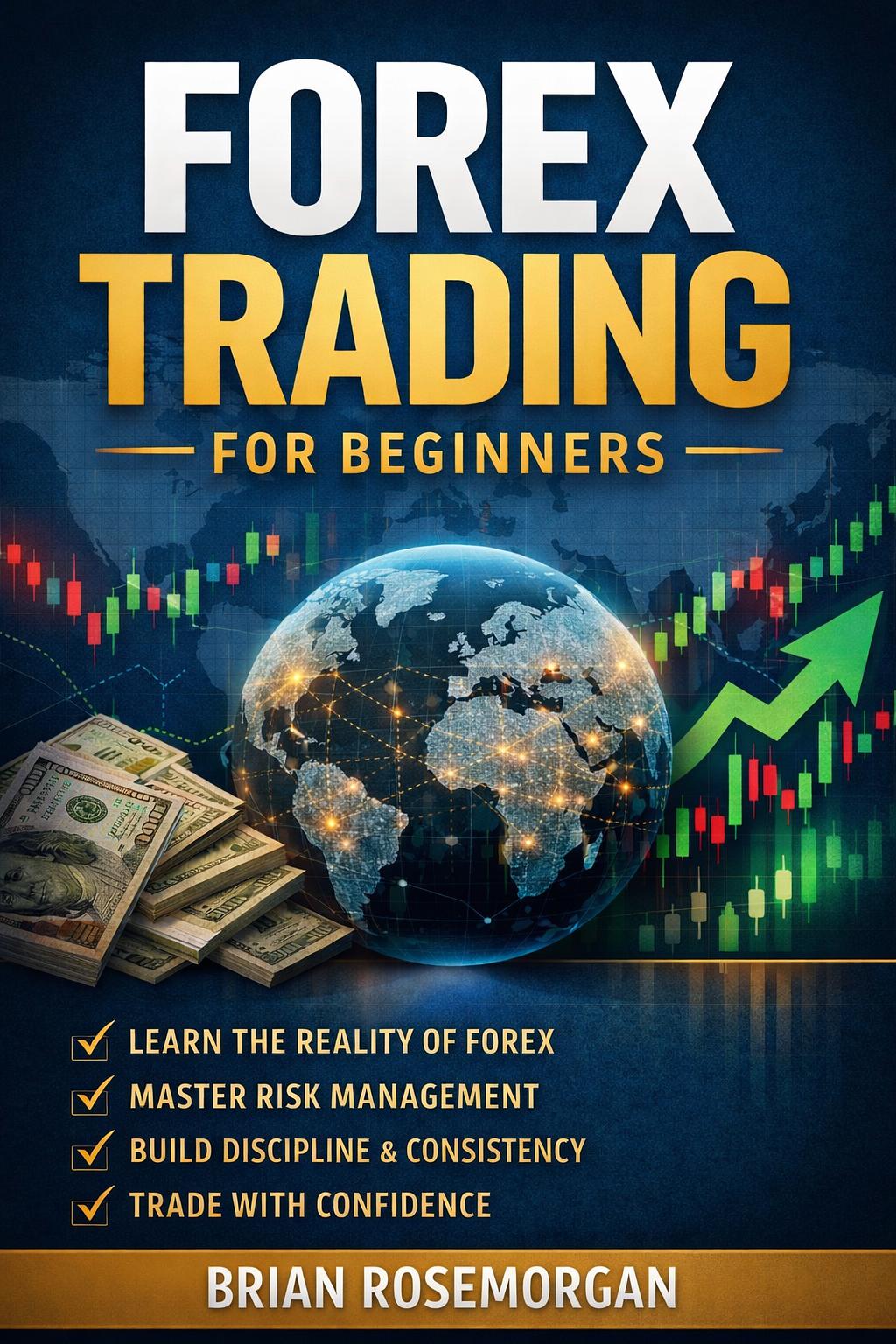
If you’ve enjoyed this free Academy, my book brings everything together in one structured beginner-friendly guide. It is designed to help new traders build their knowledge step by step rather than rushing into live trading.
Lesson Complete
Congratulations! You have completed Module 6 – Lesson 5: Forex Broker Red Flags
Click below to record your progress and return to Module 6.
Your progress will be saved automatically. Return to the Academy and continue with your next lesson whenever you’re ready.
Disclaimer: Forex trading and CFDs involve significant risk and may not be suitable for every investor. The information provided on this website is for educational purposes only and should not be considered financial, investment, or trading advice. Always verify that your broker is properly regulated before depositing funds, and practice on a demo account before trading with real money. Never risk money you cannot afford to lose. Past performance does not guarantee future results. Please read our full Risk Disclosure.