
updated octobr 2026

Brian Rosemorgan
Retired Professional Trader | 8+ Years Experience | South Africa
Questions?
Is Forex Trading a Skill or Just Gambling?
One of the most common questions beginners ask is whether forex trading is a genuine learned skill or simply another form of gambling. Both involve financial risk and uncertain outcomes, but the key difference is how decisions are made, how risk is managed, and whether a trader follows a tested approach rather than relying on luck.
Forex trading can be approached as a skill when it involves education, market analysis, a consistent trading strategy and disciplined risk management. However, trading becomes more like gambling when someone enters positions without understanding the market, risks money on impulse, or chases quick profits without a plan. Even a well-prepared trader cannot predict every price movement or guarantee a winning trade.
What Is the Difference Between Forex Trading and Gambling?
In forex trading, currencies are bought and sold in pairs, such as EUR/USD or GBP/USD. Exchange rates fluctuate in response to interest rates, economic data, market expectations and geopolitical events. Traders study these factors and price movements to assess whether a potential trade offers a reasonable opportunity.
Rather than relying entirely on chance, disciplined traders use a repeatable process to decide when to enter a trade, where to exit, and how much money they can afford to risk. However, market analysis does not remove uncertainty, and a trading strategy can lose money even when it has been carefully tested.
Traditional casino games generally have defined rules and odds, often including a mathematical house advantage. Forex markets work differently: prices are influenced by many participants and changing economic conditions, and there is no single fixed outcome or universal probability for every trade. Nevertheless, spreads, commissions, overnight charges and poor trading decisions can put traders at a disadvantage.
Why Is Forex Trading Considered a Skill?
Forex trading requires several skills that beginners must develop through study and practice:
-
Technical analysis: Learning to interpret price charts, trends, support and resistance, and other market information.
-
Fundamental analysis: Understanding how interest rates, inflation, employment figures and central bank decisions can influence currency prices.
-
Risk management: Calculating position sizes, setting appropriate stop-loss levels and limiting potential losses.
-
Trading psychology: Managing fear, greed, impatience and the temptation to recover losses through impulsive trades.
-
Strategy testing: Recording trades and evaluating whether a method performs consistently over a meaningful series of trades, including trading costs.
These skills can help traders make more informed decisions, but they do not guarantee success. Market conditions change, strategies can stop working, and even experienced traders experience losses.
10 Benefits of Risk Management in Forex Trading
Risk management is one of the most important skills a beginner can learn before trading forex. It involves identifying potential losses, deciding how much money to risk, choosing appropriate position sizes and using a trading plan to control exposure to the market. For South African traders, effective risk management can help protect trading capital in a market where currency prices can change quickly and leverage can magnify losses.
The purpose of forex risk management is not to eliminate every loss or guarantee profits. It is to prevent individual trades and repeated mistakes from exposing your account to more risk than you can afford. Here are 10 important benefits of applying risk management to forex trading.
1. Protects Your Trading Capital
Your trading capital is the money available to open and manage positions. Without risk controls, a few large losses can significantly reduce your account balance and make it harder to continue trading. Setting a maximum acceptable risk before entering a trade helps limit how much you intend to lose if the market moves against you.
For example, a South African beginner with a R5,000 trading account who plans to risk 1% per trade would aim to limit the planned loss to approximately R50. This is a risk guideline, not a guarantee, because slippage and market gaps can cause actual losses to exceed the planned amount.
2. Helps Prevent Emotional Trading
Fear, greed and frustration can lead traders to abandon their plans. A trader who loses money may increase the next position to recover the loss, while someone enjoying a winning streak may become overconfident and take unnecessary risks.
A clear risk management plan establishes rules before emotions take over. By deciding position size, stop-loss levels and acceptable losses in advance, traders can make more consistent decisions rather than reacting impulsively to every market movement.
3. Reduces the Impact of Losing Trades
Losing trades are an unavoidable possibility in forex trading, even when a strategy has been carefully developed. Risk management helps prevent one unsuccessful trade from causing disproportionate damage to your account.
For instance, losing R50 from a R5,000 account represents 1% of the starting balance. Losing R1,000 represents 20%. After a 20% loss, the remaining R4,000 would need to grow by 25% just to return to R5,000. This illustrates why controlling losses matters.
4. Helps You Understand and Control Leverage
Leverage allows traders to control a position larger than the money deposited as margin. Although this can increase potential profits, it can also magnify losses and cause an account to lose money rapidly.
South African beginners should understand the leverage offered by their broker, the size of the position they are opening and the potential loss if the market moves against them. Using lower effective exposure and calculating position sizes carefully can help prevent a small market movement from creating an unexpectedly large loss.
5. Encourages Consistent Trading Decisions
A risk management plan provides a repeatable process for deciding how much to risk on each trade. Instead of changing position sizes based on confidence or recent results, a trader follows predetermined rules and evaluates each opportunity on its merits.
Consistency also makes it easier to review trading performance. By recording entry reasons, position sizes, planned risk and outcomes, traders can identify whether their decisions follow their strategy or are being influenced by emotion.
6. Helps You Survive Losing Streaks
Every trading strategy can experience a series of losing trades. Risking too much on each position can leave an account severely depleted before market conditions improve or the trader has an opportunity to reassess the strategy.
Keeping individual trade risk within a planned limit can reduce the damage caused by a losing streak. However, risk controls cannot make an ineffective strategy profitable. Traders should review their results regularly and stop to reassess if their strategy is no longer performing as expected.
7. Improves Your Use of Stop-Loss Orders
A stop-loss order is designed to close a position when the market reaches a specified price, helping traders manage potential losses. It should be placed at a level that makes sense for the trading strategy, with the position size adjusted to suit the risk.
A stop-loss is not an absolute guarantee of the final exit price. During fast markets, price gaps or poor liquidity, an order may be executed at a different price than expected. Understanding this limitation is an important part of responsible risk management.
8. Helps You Set Realistic Profit Expectations
Without risk management, beginners may focus only on how much they hope to make and ignore how much they could lose. A structured approach considers potential reward alongside potential risk before entering a trade.
For example, a trader planning to risk R100 on a trade might look for an opportunity with a potential reward of R200. This represents a potential reward-to-risk ratio of 2:1, before trading costs. It does not mean the trade is likely to succeed or that the R200 profit is guaranteed. The strategy’s overall results must be assessed across many trades.
9. Reduces the Risk of Losing Money Needed for Essential Expenses
Forex trading should never put essential household finances at risk. In South Africa, beginners need to consider expenses such as rent, food, electricity, transport, school costs and debt repayments before deciding whether they can afford to trade.
Only money that you can afford to lose should be considered for high-risk trading. Avoid borrowing money to trade, and do not use emergency savings or funds needed for everyday living. Risk management begins with deciding whether the money should be exposed to trading risk at all.
10. Builds Long-Term Trading Discipline
Risk management encourages traders to focus on the quality of their decisions rather than the outcome of a single trade. It supports habits such as following a trading plan, recording results, reviewing mistakes and adjusting position sizes responsibly.
Over time, these habits can help traders understand their own behaviour and evaluate whether their approach is working. Long-term discipline does not guarantee profitability, but it helps prevent avoidable mistakes and makes it easier to identify weaknesses that need attention.
How Can South African Beginners Learn Forex Risk Management?
The safest starting point is to learn how currency pairs, leverage, margin, stop-loss orders and position sizing work before risking real money. Practising on a demo account allows beginners to test a trading plan and learn how losses affect results without putting their own capital at risk.
The free TryBuying Forex Learning Academy provides a structured way to learn forex from the basics, including risk management and other essential skills. Work through the lessons at your own pace and practise what you learn before considering live trading.
The bottom line: Risk management cannot guarantee profits or prevent every loss, but it can help protect trading capital, control exposure and encourage disciplined decisions. For South African beginners, learning to manage risk before focusing on potential earnings is an essential step towards understanding forex trading responsibly.
When Does Forex Trading Become More Like Gambling?
Forex trading begins to resemble gambling when decisions are driven by emotion, impulse or unrealistic expectations rather than a consistent process. Common warning signs include:
-
Opening trades without a clear reason or entry and exit plan.
-
Increasing position sizes to recover money lost on previous trades.
-
Using excessive leverage to chase large profits from a small account.
-
Moving stop-loss levels further away because a losing trade is difficult to accept.
-
Following unverified signals or buying trading robots based on promises of guaranteed returns.
-
Continuing to trade when frustrated, tired or unable to accept a loss.
These behaviours can expose a trader to unnecessary risk. A more disciplined approach involves accepting that losses are part of trading, keeping a trading journal, reviewing results honestly and stopping when predetermined risk limits are reached.
How Much Can You Make From Forex Trading in South Africa?
How much you can make from forex trading in South Africa depends on your trading capital, knowledge, strategy, risk management and market conditions. Some traders make profits, while others lose money. There is no fixed daily salary or guaranteed monthly income from forex trading, and beginners should be prepared for the possibility of losing their entire trading deposit.
Unlike a salaried job, forex trading does not provide a predictable income. A trader might make a profit one day, experience a loss the next, or go through a period without suitable trading opportunities. The amount of money in a trading account also affects the rand value of potential gains and losses.
How Much Can Beginner Forex Traders Make in South Africa?
Beginners should focus on learning how the forex market works and protecting their capital rather than trying to earn a daily income immediately. A small account generally produces smaller rand gains when risk is kept under control, and trading costs can reduce those gains further.
For example, a beginner with a R5,000 account who plans to risk 1% on a trade would be risking approximately R50 if the stop-loss is triggered at the expected price. This does not mean the trader will earn R50 per trade. The trade could make a profit, lose money or close near break-even, and actual losses can exceed the planned amount in certain market conditions.
There is no reliable daily earnings figure that applies to all beginners. Some make occasional profits, while others lose money as they learn. It is sensible to practise on a demo account before risking real capital.
How Does Your Trading Capital Affect Potential Forex Earnings?
Your account balance influences how much you can gain or lose in rand terms, but a larger account does not automatically make someone a better or more profitable trader.
The following examples show how different monthly returns would translate into rand amounts. These are mathematical illustrations, not forecasts of what traders should expect to earn.
| Trading capital | At 1% in a month | At 3% in a month | At 5% in a month |
|---|---|---|---|
| R1,000 | R10 | R30 | R50 |
| R5,000 | R50 | R150 | R250 |
| R25,000 | R250 | R750 | R1,250 |
| R50,000 | R500 | R1,500 | R2,500 |
| R100,000 | R1,000 | R3,000 | R5,000 |
These figures show hypothetical profits before any applicable trading costs and tax, assuming the stated percentage is achieved. A monthly return of 1%, 3% or 5% is not guaranteed, and a negative return would mean losing money instead. Consistently achieving high returns without substantial risk is difficult.
A trader should never increase risk simply to turn a small account into a large income. Doing so can lead to rapid losses, especially when leverage is involved.
Can You Make R500 or R1,000 a Day Trading Forex?
It is possible to make R500 or R1,000 on a profitable trading day, but these amounts are not reliable daily earnings targets. Whether they are achievable depends on account size, position size, price movements, trading costs and the risk taken to pursue the target.
For example, aiming to make R1,000 a day from a R5,000 account would mean targeting a return equal to 20% of the account in a single day. Trying to achieve that consistently would generally require taking very substantial risks. Even a larger account cannot guarantee a daily profit.
A more sensible approach is to develop a tested strategy, define acceptable risk before each trade and evaluate performance over many trades and different market conditions. Some days, the best decision may be not to trade at all.
Can Forex Trading Become a Full-Time Income in South Africa?
Forex trading can produce income for some experienced traders, but it is not a dependable source of earnings for everyone. Becoming reliant on trading profits to pay rent, buy food or cover other essential expenses can create pressure to take trades that do not meet your strategy’s requirements.
Before considering full-time trading, a person should have a demonstrated trading record over a meaningful period, understand the possibility of losing money, and keep living expenses separate from trading capital. An emergency fund and an alternative source of income can reduce pressure to withdraw money from a trading account during a losing period.
Do not borrow money or use funds needed for household expenses to try to generate forex income.
What Affects How Much Money You Can Make Trading Forex?
Several factors influence your results:
-
Starting capital: Determines the amount available to trade and the rand value of percentage gains and losses.
-
Trading skill and strategy: Your ability to identify opportunities and follow a tested method affects performance, but does not guarantee profits.
-
Risk management: Position sizing, stop-loss orders and limits on total exposure can help control losses.
-
Leverage: Allows you to control a larger position with a smaller deposit, but also magnifies losses relative to your capital.
-
Trading costs: Spreads, commissions, overnight financing and other applicable charges can reduce returns.
-
Market conditions: Currency prices can move unpredictably, and a strategy that performs well in one market environment may struggle in another.
-
Emotional discipline: Fear, greed and revenge trading can lead to decisions that undermine an otherwise structured approach.
Do Forex Traders in South Africa Pay Tax on Their Profits?
Forex trading profits may be taxable in South Africa, depending on the nature of the activity and the taxpayer’s circumstances. The South African Revenue Service (SARS) considers the relevant facts when determining how income or gains should be treated. Active trading profits may be treated as revenue and taxed at applicable income tax rates, but the correct treatment is not necessarily identical for every trader.
Keep accurate records of deposits, withdrawals, transactions, trading costs and profits or losses. If you trade regularly or generate significant income, consult a qualified South African tax practitioner about your circumstances rather than assuming that all forex profits are taxed in the same way.
How Can Beginners Start Forex Trading More Safely?
Beginners should learn the basics of currency pairs, leverage, order types and risk management before opening a live account. Practise with a demo account, keep a trading journal and assess whether you can follow your strategy consistently without taking unnecessary risks.
South African traders should also check the broker’s legal entity and relevant regulatory status through the Financial Sector Conduct Authority (FSCA) where applicable. Do not rely solely on a broker’s advertising or a claim that it is regulated.
The bottom line: There is no fixed amount you can expect to make from forex trading in South Africa. Your results depend on your capital, trading decisions, risk exposure and market conditions, and losses are always possible. Beginners should prioritise education, consistent risk management and protecting their money rather than chasing a daily income target.
Is Forex Trading Suitable for Beginners?
Forex trading is not suitable for everyone. Beginners need time to learn how currency pairs work, understand leverage, practise risk management and recognise the emotional pressures involved. Starting with a demo account allows new traders to practise without risking real capital, although demo results may differ from live trading because of execution, costs and psychological pressure.
For South African beginners, it is also important to check a broker’s legal entity and relevant regulatory status rather than relying only on advertising or claims of being regulated. Never trade money needed for household expenses, essential bills or emergency savings.
The bottom line: Forex trading is not automatically a skill or automatically gambling. It depends on how it is approached. Education, testing, disciplined execution and risk management can make trading more systematic, but they cannot remove market uncertainty or guarantee profits. Treat forex as a high-risk activity that requires ongoing learning, not as a quick or dependable way to earn an income.
1. Understanding Probabilistic Expectancy Versus Casino Odds
Casino gambling relies on fixed mathematical house edges designed to drain player capital over time. Conversely, professional forex trading allows participants to engineer positive mathematical expectancy by managing risk-to-reward ratios so that winning outcomes outweigh losing outcomes across numerous trades.
2. Technical Analysis Replaces Emotional Guesswork
Gamblers rely on superstitious hunches, hope, and emotional reactions to sudden outcomes. Professional forex traders utilize structured technical analysis, indicator logic, chart patterns, and multi-timeframe confirmation to make objective, data-driven decisions independent of short-term psychological impulses.
3. The Definitive Role of Risk Management
A gambler increases stakes to chase previous losses, accelerating account destruction. A skilled forex trader implements rigid risk management protocols—such as risking a fixed tiny percentage per trade and setting stop-losses—ensuring capital preservation remains the top priority.
4. Treating Trading Like Running a Business
Gamblers view participation as entertainment or a shortcut to instant wealth. Successful traders approach their craft like managing a structured enterprise, maintaining detailed trading journals, reviewing performance metrics constantly, and treating losses as normal operational business expenses.
5. Mastering Emotional Self-Control
The greatest challenge in forex trading is not conquering the live market charts, but mastering one’s own internal psychology. Overcoming greed, fear, and impatience through disciplined execution turns trading from an emotional gamble into a reliable, acquired professional skill.
Brian’s Expert Advice
Throughout my years in the live markets, I saw many newcomers treat trading like a slot machine—clicking buttons on gut feeling and hoping for a miracle. If you approach forex without a tested plan, risk limits, and emotional discipline, it is worse than gambling because the losses happen faster. Treat it like a profession, study the mechanics, and let probability work for you.
| Key Feature | What You Need to Know | Actionable Takeaway |
|---|---|---|
| Decision Basis | Gambling relies on luck; trading relies on data and technical analysis. | Base every trade on objective chart rules, never on hope. |
| Risk Control | Gamblers increase bets to chase losses; traders enforce strict stop-losses. | Protect your account equity with fixed percentage risk limits. |
| Long-Term View | Gambling guarantees house profit over time; skill creates edge longevity. | Commit to continuous education and performance journal reviews. |
Frequently Asked Questions
1. Why do people compare forex trading to gambling?
People compare forex to gambling because both involve financial risk and uncertain short-term outcomes. Uninformed beginners often place trades based on random hunches without a plan, making their market participation functionally identical to placing bets at a casino.
2. Is forex trading legally classified as gambling?
No, forex trading is legally classified as financial market participation and derivatives trading, regulated by official financial authorities like the FSCA. It requires licensed brokers, transparent asset pricing, and adherence to strict financial services regulations.
3. How does technical analysis separate trading from gambling?
Technical analysis uses historical price data, indicator logic, and market structure to identify high-probability setups. Unlike gambling luck, technical analysis provides a repeatable framework to evaluate risk-to-reward ratios before entering any position.
4. Can you lose money in forex even with good skills?
Yes, professional traders experience losing trades regularly because market direction can never be predicted with 100% certainty. The difference lies in skill: professionals keep losses small and controlled, whereas gamblers let losses destroy their entire accounts.
5. Mastering Emotional Self-Control in Forex Trading
Mastering emotional self-control in forex trading means learning to make trading decisions based on a clear plan rather than fear, greed, frustration or excitement. Currency markets can move quickly, and the pressure of watching profits and losses change can cause beginners to abandon their strategies, enter trades impulsively or take unnecessary risks.
Successful trading requires more than understanding charts and market movements. Traders must also develop the discipline to follow their rules when a trade goes against them, accept losses without trying to recover them immediately, and avoid becoming overconfident after a profitable trade. Emotional control cannot guarantee profits, but it can help prevent avoidable mistakes.
How Do Emotions Affect Forex Trading?
Emotions can influence decisions before, during and after a trade. Recognising common emotional reactions is the first step towards managing them.
-
Fear: A trader may close a position too early because they are afraid of losing a small profit, or hesitate to enter a valid trade after experiencing previous losses.
-
Greed: After making a profit, a trader may increase position sizes or keep a trade open for too long while hoping to earn more.
-
Revenge trading: Following a loss, a trader may immediately open another position to recover the money, often without waiting for a suitable trading opportunity.
-
Overconfidence: A series of winning trades can create the false impression that the market is easy to predict, leading to excessive risk-taking.
-
Impatience: Beginners may enter trades before their strategy’s conditions are met because they do not want to miss a potential opportunity.
These reactions can lead to inconsistent decisions and poor risk management. The aim is not to eliminate every emotion, but to recognise when emotions are influencing a decision and return to a predefined trading process.
How Can You Control Your Emotions When Trading Forex?
1. Create a trading plan before entering the market.
Decide what conditions must be present before you open a trade, where you will enter and exit, how much you are prepared to risk, and when you will stop trading. A written plan reduces the temptation to make spontaneous decisions when prices move quickly.
2. Risk only an amount you can afford to lose.
Large positions can make normal market fluctuations feel overwhelming. Choose a position size that keeps potential losses within your predetermined limits. Some traders use a small percentage of their account as a risk guideline, but no percentage guarantees safety, and stop-loss orders may execute at a different price during volatile conditions.
3. Accept that losses are part of trading.
Even a well-tested strategy will produce losing trades. A single loss does not automatically mean that your strategy has failed. Review whether you followed your rules instead of immediately changing your approach or increasing your risk to recover the money.
4. Avoid revenge trading.
If a loss makes you angry or frustrated, step away from the platform rather than immediately opening another position. Return only when you can assess the market calmly and a valid setup appears under your trading plan.
5. Do not chase every market movement.
Missing a trade is not a reason to enter late or abandon your rules. There will be other opportunities, but forcing a trade simply because the market is moving can expose you to unnecessary risk.
6. Keep a trading journal.
Record why you entered each trade, the planned risk, the result and how you felt during the process. Over time, your journal may reveal patterns such as closing winners too early, moving stop-losses, trading after losses or taking excessive risks after a winning streak.
7. Set limits on trading time and losses.
Decide in advance when you will trade and under what circumstances you will stop for the day. If you are tired, distracted, frustrated or unable to follow your rules, taking a break is often more sensible than continuing to trade.
Why Is Discipline More Important Than a Single Winning Trade?
One profitable trade does not prove that a trader has a successful strategy, and one losing trade does not necessarily mean the strategy is poor. Trading performance should be evaluated over a meaningful series of trades, taking account of losses, trading costs and whether the rules were followed.
A disciplined trader focuses on making consistent decisions rather than trying to win every trade. This approach helps separate the quality of the decision from the uncertainty of the outcome. However, discipline alone cannot make an ineffective strategy profitable; the strategy must also be tested and reviewed.
How Can Beginners Practise Emotional Control?
Beginners can start by using a demo account to practise following a trading plan without risking real money. Treat each demo trade as a learning exercise: define the entry, stop-loss and exit conditions, record the result, and review whether you followed your rules.
Before moving to live trading, make sure you understand leverage, position sizing and the possibility of losing money. Remember that demo trading does not fully reproduce the psychological pressure of risking real funds. Start cautiously if you eventually decide to trade live, and never use money needed for essential expenses.
The bottom line: Mastering emotional self-control in forex trading is about building habits that help you make planned, consistent decisions under uncertainty. By managing risk, accepting losses, keeping a trading journal and avoiding impulsive trades, beginners can develop greater discipline without confusing emotional confidence with guaranteed trading success.
6. How do professional traders manage risk differently than gamblers?
Professional traders calculate exact position sizes, risk a tiny fixed fraction of capital per trade, and use automated stop-loss orders. Gamblers frequently increase risk exposure after losses, trying to recover funds through emotional, oversized bets.
7. Do I need to treat trading like learning a business?
Treating forex like a business means tracking performance metrics, maintaining a detailed trading journal, managing operational overhead, and accepting drawdowns as normal business expenses rather than personal emotional insults.
8. Can anyone learn forex as a practical skill?
Yes, anyone can learn forex trading through structured education, dedication, and deliberate practice. Much like learning an instrument or a sport, proficiency develops over time through consistent study and live market experience.
9. Should I test my trading skills on a demo account?
Always. Testing strategies on a demo account allows you to build competence, evaluate execution mechanics, and master emotional discipline without risking actual capital. It is an essential proving ground for every serious beginner.
Brokers to Consider for Demo Trading
If you are learning forex risk management, I recommend starting with a demo account rather than rushing into live trading. When comparing brokers, look beyond advertised spreads and consider regulation, commissions, execution, platform availability, withdrawal conditions and customer support.
The brokers below are included because they offer demo-trading options. This section contains affiliate links, so I may receive a commission if you open an account through one of the links. This does not mean that either broker is suitable for every trader. Always research the broker yourself and verify its current regulatory status and trading conditions before opening an account.
XM
Demo account available
MT4 & MT5
Multiple account options
Educational resources
An option to investigate if you want to practise trading on demo while comparing its costs, platforms and account conditions with other brokers.
AvaTrade
Demo account available
MT4 & MT5
AvaTradeGO platform
Educational resources
Another option to investigate if you want to compare platforms, trading conditions and educational resources while practising on demo.
Important: Spreads, commissions, leverage and other trading conditions can change. Always check the broker’s current terms, costs, regulation and withdrawal requirements before opening an account.
Forex Trading for Beginners
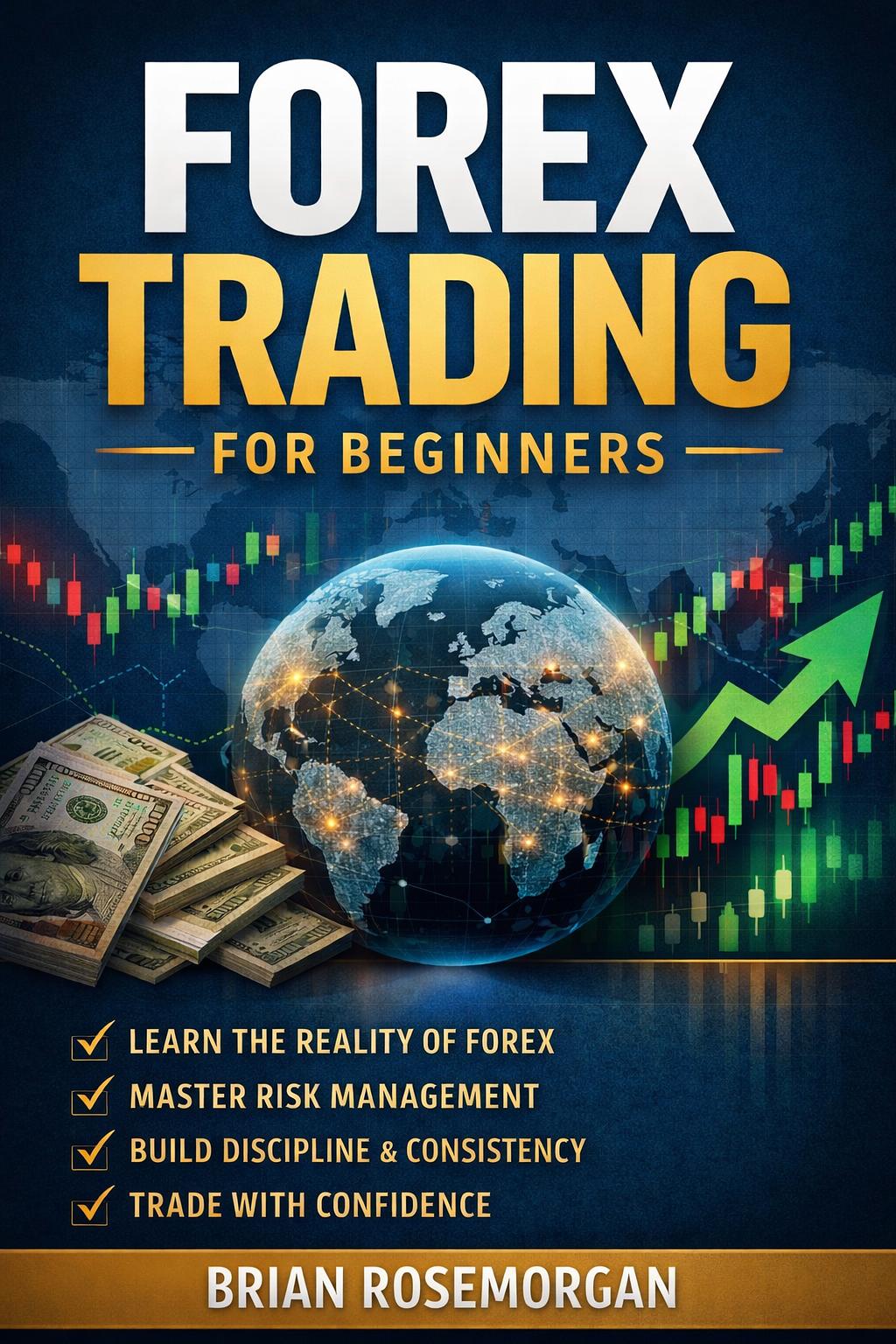
If you’ve enjoyed this free Academy, my book brings everything together in one structured beginner-friendly guide. It’s the perfect companion to the lessons you’ll complete here on TryBuying.
section compleat
Disclaimer: Forex trading and CFDs involve significant risk and may not be suitable for every investor. The information provided on this website is for educational purposes only and should not be considered financial, investment, or trading advice. Always verify that your broker is properly regulated before depositing funds, and practice on a demo account before trading with real money. Never risk money you cannot afford to lose. Past performance does not guarantee future results. Please read our full Risk Disclosure
relevent schama