
Updated September 2026

Brian Rosemorgan
Retired Professional Trader | 8+ Years Experience | South Africa
Questions?
Professional Forex Trading Systems & Expert Advisors: Understanding Automated Trading
A professional forex trading system is more than simply a piece of software that places trades automatically. At its foundation is a clearly defined trading methodology that explains when a trade should be considered, when it should be entered, how much risk should be taken, how the position should be managed and when the trade should be closed.
When those rules are converted into software, the resulting program may be called an Expert Advisor, or EA. An EA can monitor the market continuously and execute instructions without requiring the trader to manually click the buy or sell button every time a condition occurs.
This can make trading more systematic, but it does not make forex trading risk-free. A computer will follow the instructions it has been given whether those instructions are sensible, outdated or poorly designed. Automation therefore changes how a strategy is executed; it does not automatically improve the underlying strategy.
A professional approach to automated trading normally involves several stages: developing a trading idea, converting that idea into objective rules, programming the rules, backtesting the system, checking it with data that was not used during development, forward-testing it on a demo account and continuously monitoring its behaviour.
In this lesson, you will learn how those parts fit together, what an Expert Advisor can and cannot do, why testing quality matters and why risk management remains essential even when every trade is executed automatically.
1. What Is an Expert Advisor?
An Expert Advisor (EA) is a software program designed to perform trading-related tasks according to predefined instructions. EAs are commonly associated with platforms such as MetaTrader, where they can monitor price data, indicators and other conditions and then respond according to their programming.
Depending on how it has been designed, an EA may identify potential entries, open trades, place stop-loss and take-profit orders, adjust positions, close trades and enforce certain risk limits. More advanced systems may also monitor trading sessions, spreads, volatility or the number of positions already open.
The important point for beginners is that an EA does not think about the market in the same way a human trader does. It does not understand context unless that context has been converted into a measurable rule. If the program is instructed to buy when one moving average crosses another, it will attempt to follow that instruction whenever the defined conditions occur.
This is one of the major differences between manual and automated trading. A human may look at a chart and decide that a particular setup looks unusual because of current market conditions. An EA generally cannot make that judgement unless the relevant conditions have been explicitly programmed.
For this reason, the quality of an EA depends heavily on the quality of the strategy and rules behind it. Automation can improve consistency of execution, but it cannot guarantee that the underlying trading idea will work in every market environment.
What an EA can potentially automate
- Monitoring price and indicator conditions
- Identifying predefined entry signals
- Opening and closing trades
- Placing stop-loss and take-profit orders
- Calculating position sizes according to programmed rules
- Limiting the number of simultaneous positions
- Stopping trading after predefined risk limits are reached
- Recording or reporting trading activity
The more clearly these rules are defined, the easier the system is to test. A strategy based on statements such as “buy when the chart looks strong” is difficult to automate because the phrase “looks strong” is subjective. A rule such as “buy when the 20-period moving average crosses above the 50-period moving average and the spread is below a specified maximum” is much easier for software to interpret.
2. How Professional Trading Systems Are Structured
A well-structured automated trading system normally contains several connected components. The exact design will vary from one strategy to another, but a useful framework includes market conditions, entry rules, position sizing, trade management, exit rules, risk controls and monitoring procedures.
The entry rule answers the question: “What must happen before the EA considers opening a trade?” The exit rule answers: “What must happen for the position to be closed?” Risk management determines how large the position should be and what limits apply if the trade moves against the system.
For example, an educational trading system might be designed around a moving-average crossover. The system could specify a particular currency pair, timeframe, indicator settings, entry condition, stop-loss method, maximum risk per trade and exit condition.
That does not mean the example is profitable. It simply demonstrates how a trading idea can be converted into a structured set of instructions that a computer can understand and test.
A more complete automated system should also consider what happens outside the normal entry and exit process. For example, what should the EA do if spreads suddenly become unusually wide? What happens if the trading platform loses its connection? Should the system continue opening trades if several positions are already active? Should it stop after a predefined daily loss?
These questions are important because professional system design is not only about finding entries. It is also about defining what the system is allowed to do and what it must not do.
A useful structure for an automated strategy
| Market | Which currency pairs or markets can the EA trade? |
| Timeframe | Which chart timeframe is used to generate signals? |
| Entry | What exact conditions must exist before entering? |
| Risk | How much account capital can be placed at risk? |
| Exit | What conditions close the position? |
| Safety Controls | When should the EA stop opening new positions? |
3. Programming Strategy Into an EA
Programming an Expert Advisor means translating a trading strategy into instructions that software can execute consistently. This is where many beginners discover that a strategy they thought was clearly defined still contains subjective decisions.
For example, a trader might say, “I buy when the market is in a strong uptrend.” A human may have an intuitive understanding of what that means, but a computer needs measurable conditions. The developer might therefore need to define the trend using moving averages, price structure, momentum or another objective measurement.
The same applies to exits. A statement such as “close the trade when momentum weakens” is not sufficiently precise by itself. The programmer needs to know exactly how weakening momentum is measured and what threshold triggers the exit.
This is why strategy development should come before programming. If the rules are unclear on paper, writing more code will not solve the underlying problem.
Example of turning an idea into rules
Imagine a purely educational example based on two moving averages:
- Market: EUR/USD
- Timeframe: 1-hour
- Entry: a 20-period moving average crosses above a 50-period moving average
- Stop-loss: determined by a predefined method
- Maximum risk: a fixed percentage of account equity
- Exit: a predefined opposite signal or protective stop
The example above is not a recommendation and does not demonstrate that the strategy is profitable. Its purpose is to show the difference between a general trading idea and a set of objective instructions.
Once the rules are objective, they can be programmed, tested and measured. If the rules cannot be clearly explained, the system may produce results that are difficult to understand or reproduce.
Another important consideration is that more complicated does not necessarily mean better. Adding large numbers of indicators, filters and adjustable settings can make an EA look sophisticated while making it harder to understand, test and maintain. A simpler system with clearly defined rules can be easier to evaluate than a highly complicated system whose behaviour is difficult to explain.
4. Testing and Optimising an Automated System
Testing is one of the most important stages in automated trading because it provides a way to examine how a strategy behaves before risking real money. However, a backtest should be viewed as evidence about historical behaviour, not proof of future profitability.
During a backtest, the EA is run against historical market data to see how the programmed rules would have behaved. Depending on the quality of the data and testing environment, a trader can examine metrics such as total trades, winning and losing trades, drawdown, average trade, losing streaks and the effect of trading costs.
Testing should not focus only on the final account balance. A system that produced a large historical return while experiencing an extremely large drawdown may expose the trader to a level of risk that is unsuitable for their circumstances.
Important factors when evaluating a backtest
- Drawdown: How far did the account decline from a previous high?
- Losing streaks: How many losing trades occurred consecutively?
- Trading costs: Were spreads, commissions and other realistic costs included?
- Slippage: Could real execution differ from the assumed historical entry or exit price?
- Trade frequency: Is the number of trades large enough to provide meaningful evidence?
- Market conditions: Did the strategy experience different types of markets?
- Out-of-sample performance: Does the system still behave reasonably on data that was not used to develop it?
Why optimisation can become dangerous
Optimisation involves changing strategy parameters to examine how different settings affect historical results. This can be useful, but excessive optimisation can create a serious problem known as overfitting or curve-fitting.
Overfitting occurs when a system becomes highly tuned to historical data rather than capturing a robust trading relationship. The backtest can then look extremely attractive while the strategy performs very differently when exposed to new market conditions.
A more responsible testing process therefore separates development data from testing data and uses forward testing to examine how the system behaves outside the original historical sample.
Even a strong backtest cannot remove uncertainty. Market behaviour changes, transaction costs vary and live execution may differ from historical assumptions.
5. Monitoring a Professional EA
One of the biggest misunderstandings about automated trading is the idea that once an EA has been installed, the trader no longer needs to pay attention to it. Automation reduces the need for manual order entry, but it does not remove the need for oversight.
An EA operates within the conditions for which it was designed. If market behaviour changes substantially, the strategy may behave differently from the historical results used during development. Technical problems can also affect execution, including internet interruptions, platform errors, server issues, incorrect settings or failed connections.
For this reason, an automated system should have a monitoring process. The trader should know what normal behaviour looks like and what circumstances should cause the system to be reviewed or paused.
Examples of monitoring controls
- Maximum risk per trade
- Maximum number of open positions
- Maximum daily or weekly loss
- Maximum account drawdown
- Maximum spread allowed
- Trading-hour restrictions
- Rules for unusual market conditions
- A clear manual shutdown or “kill switch”
These controls do not guarantee that an automated system will avoid losses. Their purpose is to place boundaries around what the system is permitted to do.
Monitoring should also include comparing actual live or demo behaviour with the expected behaviour from testing. If an EA suddenly produces very different trade frequency, drawdown or execution results, that difference should be investigated rather than ignored.
💡 Brian’s Expert Advice
I learned early that automation is not a magic solution to forex trading. A robot can execute a good set of rules consistently, but it can also execute bad rules consistently. The computer does not know whether the strategy is sensible; it simply follows the instructions it has been given.
That is why I believe the strategy must always come first and the technology second. Before worrying about sophisticated programming, make sure you understand exactly what the system is supposed to do, when it should trade, how much it should risk and when it should stop.
If you are considering building an Expert Advisor, start with something simple that you understand completely. Write the rules down, test them historically, examine the drawdown and losing periods, and then move to demo trading before considering real money.
Most importantly, never allow the excitement of automation to make you ignore basic risk management. A robot can remove some emotional decision-making from execution, but it cannot remove the financial risk of the market.
| Key Feature | What You Need to Know | Actionable Takeaway |
|---|---|---|
| Expert Advisor | An EA is software that follows predefined trading instructions and can automate tasks such as analysing conditions, placing orders and managing positions. | Understand exactly what your EA is programmed to do before allowing it to trade. |
| Strategy Rules | Automated systems require objective entry, exit, position-sizing and risk-management conditions. | Write and test your strategy rules before turning them into computer code. |
| Backtesting | Historical testing can reveal how a strategy behaved under previous market conditions, but it cannot guarantee future results. | Look beyond profit and examine drawdown, costs, losing streaks and robustness. |
| Optimisation | Changing parameters can improve historical results, but excessive optimisation can lead to overfitting. | Test the strategy on data that was not used to build or optimise it. |
| Risk Controls | Automated systems should have predefined limits for position size, exposure, drawdown and trading activity. | Make risk limits part of the system rather than treating them as an afterthought. |
| Monitoring | An automated system can experience technical or market-related problems and should be monitored. | Know when to pause the EA and investigate unexpected behaviour. |
Frequently Asked Questions
1. What is a professional forex trading system?
A professional forex trading system is a structured method for making and managing trading decisions. It defines the conditions for entering a trade, managing the position, controlling risk and exiting the trade. The system may be followed manually by a trader or converted into software and automated through an Expert Advisor.
The important distinction is that a trading system should contain identifiable rules rather than depending entirely on intuition or emotion. A clearly defined system can be tested and reviewed, although testing cannot guarantee that the system will remain profitable in the future.
2. What is an Expert Advisor in forex trading?
An Expert Advisor, commonly called an EA, is software designed to automate trading instructions on compatible platforms. Depending on its programming, it can analyse market conditions, identify predefined signals, open and close positions, manage orders and apply risk controls.
An EA does not automatically know whether a trading strategy is good or bad. It simply executes the instructions contained in its programming. This is why understanding the strategy behind the EA is important before using it.
3. Can an Expert Advisor trade automatically?
Yes. An appropriately configured Expert Advisor can automatically monitor market conditions and execute trades according to its programmed rules. It may also manage stop-losses, take-profit orders and other position-management instructions.
However, automatic execution should not be confused with automatic profitability. The EA remains dependent on the strategy, market conditions, execution environment, programming quality and risk controls. The trader is still responsible for selecting, testing and monitoring the system.
4. What should be included in an automated trading system?
A properly designed automated trading system should normally define its trading market, timeframe, entry conditions, exit conditions, position sizing and risk limits. It should also consider trading costs, maximum exposure and the circumstances under which trading should stop.
A more complete system should also include procedures for unusual conditions. For example, the developer may define a maximum acceptable spread, maximum daily loss or maximum number of simultaneous positions. These controls help establish boundaries around the EA’s behaviour.
5. Are Expert Advisors profitable?
An Expert Advisor may make profits during certain periods and lose money during others. There is no reliable guarantee that an EA will remain profitable across different market environments.
Performance can be affected by the underlying strategy, market conditions, spread, commissions, slippage, execution quality, programming and risk management. A historical backtest showing attractive results does not establish that the same results will occur in live trading.
6. Should I buy a ready-made forex robot?
Anyone considering a ready-made forex robot should investigate it carefully rather than relying only on advertising claims. Be particularly cautious of claims involving guaranteed profits, unusually consistent returns or very large historical gains without a clear explanation of the associated risk.
Before purchasing an EA, investigate what strategy it uses, how the historical results were produced, the maximum drawdown, losing periods, trading costs and risk settings. If possible, test the system yourself on a demo account and understand how it behaves before considering real money.
7. How should I test an Expert Advisor?
A sensible testing process can begin with historical backtesting and then move to forward testing on a demo account. During testing, examine more than the final percentage return. Look at drawdown, losing streaks, number of trades, average trade, trading costs and how the system behaves during different market conditions.
It is also important to test the system on data that was not used to develop or optimise it. This can help identify whether the strategy has become overly fitted to its historical sample.
8. Can an Expert Advisor replace risk management?
No. Risk management remains essential when using automated trading. An EA should be programmed with appropriate limits for position size, stop-losses, account exposure and other relevant risks.
In fact, risk controls can be particularly important in automated trading because software can execute multiple instructions quickly and consistently. If the rules are poorly designed, automation can make an existing problem happen repeatedly rather than correcting it.
9. Should beginners use Expert Advisors?
Beginners can learn about Expert Advisors, but understanding the underlying trading strategy should come before relying on automation. If you do not understand why an EA enters or exits a trade, it becomes much harder to evaluate whether its behaviour is appropriate.
A demo account provides an opportunity to observe how an EA operates without immediately exposing real capital to the system. Beginners should treat automated trading as an area to learn and test carefully rather than as a shortcut around learning forex.
🛠 Brokers to Consider for Demo Trading
If you are learning about Expert Advisors and automated trading, starting with a demo account can allow you to practise without immediately placing real capital at risk. When comparing brokers, look beyond advertised spreads and consider regulation, commissions, execution, platform availability, withdrawal conditions, account requirements and customer support.
The brokers below are included because they offer demo-trading options. This section contains affiliate links, so I may receive a commission if you open an account through one of the links. This does not mean that either broker is suitable for every trader. Always research the broker yourself and verify its current regulatory status and trading conditions before opening an account.
XM
✔ Demo account available
✔ MT4 & MT5
✔ Multiple account options
✔ Educational resources
An option to investigate if you want to practise automated trading on demo while comparing its platforms, costs and account conditions with other brokers.
AvaTrade
✔ Demo account available
✔ MT4 & MT5
✔ AvaTradeGO platform
✔ Educational resources
Another option to investigate if you want to compare platforms, trading conditions and educational resources while practising automated trading on demo.
Important: Spreads, commissions, leverage and other trading conditions can change. Always check the broker’s current terms, costs, regulation and withdrawal requirements before opening an account.
📘 Forex Trading for Beginners
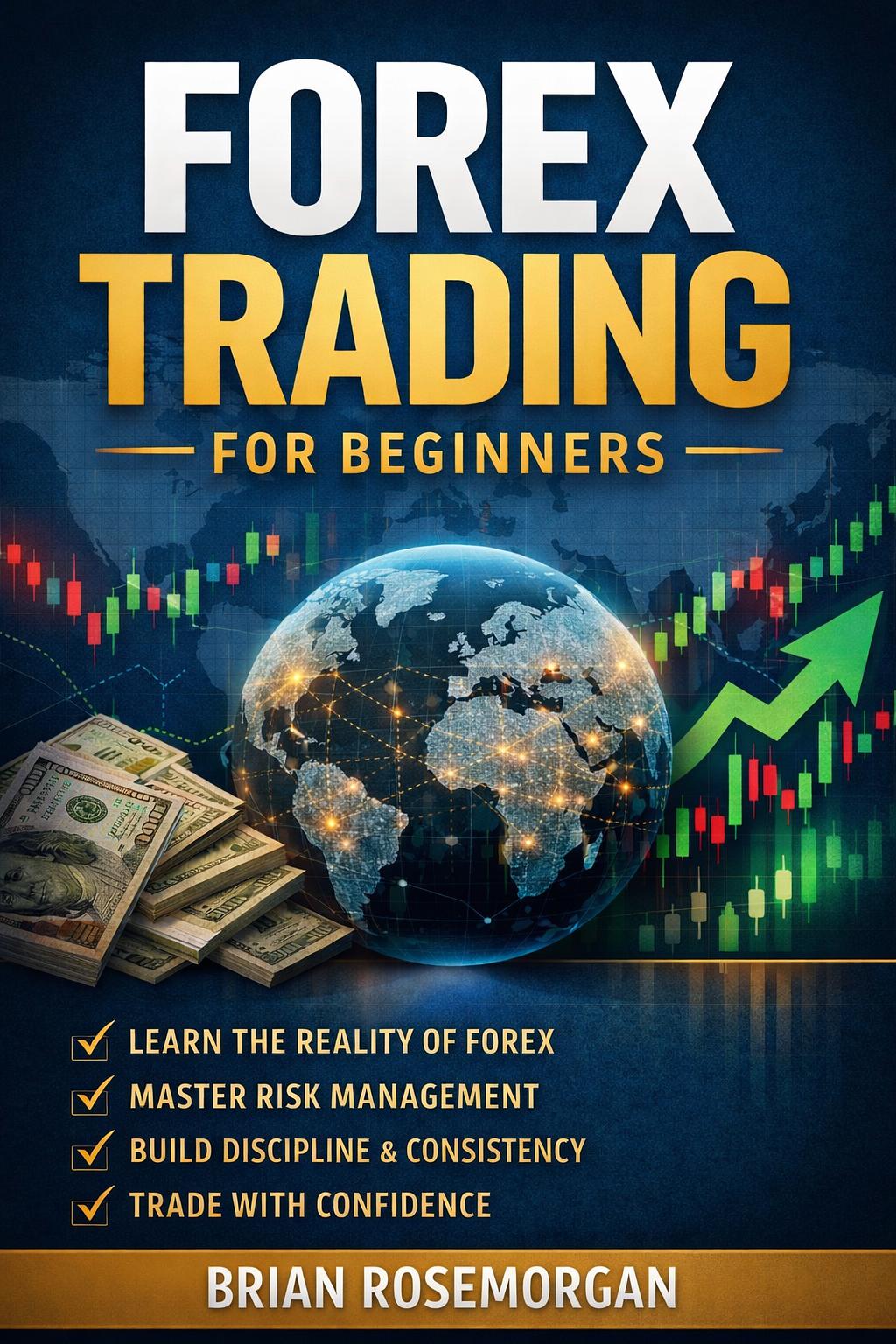
If you’ve enjoyed this free Academy, my book brings everything together in one structured beginner-friendly guide. It can be used alongside the lessons you complete here on TryBuying.
🎉 Lesson Complete
Congratulations! You have completed Professional Systems & Expert Advisors.
Click below to record your progress and return to the Academy.
Your progress will be saved automatically. Return to the Academy and continue with your next lesson whenever you’re ready.
Disclaimer: Forex trading and CFDs involve significant risk and may not be suitable for every investor. The information provided on this website is for educational purposes only and should not be considered financial, investment, or trading advice. Always verify that your broker is properly regulated before depositing funds, and practice on a demo account before trading with real money. Never risk money you cannot afford to lose. Past performance does not guarantee future results. Please read our full
Risk Disclosure