
Updated September 2026

Brian Rosemorgan
Retired Professional Trader | 8+ Years Experience | South Africa
Questions?
- Tokyo: 00:00 — 08:00
- London: 09:00 — 15:00
- Overlap: 15:00 — 17:00
- New York: 17:00 — 00:00
Leverage and Margin Explained: How They Work and Why They Risk Your Capital
When you first open a retail forex trading account, one of the most striking features you will encounter is leverage. Brokers offer leverage as a mechanism to borrow capital, allowing you to control large market positions with a relatively small deposit.
To many beginners, high leverage looks like a shortcut to immense wealth—a way to turn a small deposit into massive returns overnight. However, in professional trading, leverage is viewed entirely differently: it is a double-edged sword and the single fastest way to wipe out an account if mismanaged.
In this lesson, you will learn how leverage and margin work in practical terms, the mechanics of margin calls and stop-outs, and why learning to control your leverage exposure is essential for long-term trading survival.
Understanding Leverage Ratios in Practice
The table below compares how different leverage ratios impact the actual position size and capital requirement when trading a standard lot or mini lot in the forex market.
| Leverage Ratio | Position Control Power | Required Margin for 1 Mini Lot ($10,000) | Beginner Risk Assessment |
|---|---|---|---|
| 1:1 (No Leverage) | Control exactly what you deposit. | $10,000 (Full Value) | Safest, but requires substantial starting capital. |
| 1:30 (Regulated Standard) | Control $30 for every $1 deposited. | $333.33 | Balanced protection standard under major regulatory frameworks. |
| 1:100 (Common Offshore) | Control $100 for every $1 deposited. | $100.00 | Moderate risk; requires rigorous lot-size discipline. |
| 1:500+ (High Risk) | Control $500+ for every $1 deposited. | $20.00 | Extreme hazard. A minor market tick can instantly wipe equity. |
Note: Higher leverage does not increase your profit probability; it only increases your market exposure per dollar deposited.
1. What Is Forex Leverage?
Leverage is essentially a facility provided by your broker that lets you trade positions larger than your actual account balance. For example, with a leverage ratio of 1:100, you can control a $10,000 currency position with just $100 of your own money.
While this sounds attractive because it lowers the barrier to entry for retail traders, it also means that market fluctuations apply to the full $10,000 position value, not just your $100 deposit.
2. Understanding Margin: Used vs. Free Margin
Margin is the amount of money required from your account balance to open and maintain a leveraged position. When you open a trade, a portion of your funds is locked aside by your broker as used margin.
The remaining equity in your account that is not tied up in open positions is known as free margin. If your open trades start accumulating losses, your equity drops, reducing your free margin and bringing you closer to a margin call.
3. The Danger of Margin Calls and Stop-Outs
A margin call occurs when your account equity falls below a specific percentage required to maintain your open positions (often set at 100% or 50% depending on the broker).
If the market continues moving against you and equity drops further to the stop-out level, your broker will automatically begin closing your open trades at a loss to prevent your account balance from plunging into a negative deficit.
4. Why High Leverage Destroys Beginner Accounts
Many offshore brokers market extreme leverage levels such as 1:500 or 1:1000 to beginners. When traders use maximum leverage, they tend to trade lot sizes that are far too large for their small account balance.
When a position is massively over-leveraged, even a tiny adverse price movement of a few pips can wipe out your entire equity balance before you even have time to react.
5. Practical Rules for Managing Leverage Safely
Professional risk management requires treating leverage as a tool for capital efficiency rather than a license to gamble. Always calculate your position size based on a strict 1% risk rule.
Instead of asking “How much leverage can I use?”, ask “How many pips can the market move against me before I lose more than 1% of my account?” This mindset shift separates surviving traders from blown accounts.
💡 Brian’s Expert Advice
During my early years in the forex market, I fell into the trap of using maximum leverage on every trade. I thought controlling a massive position size made me look like a professional. In reality, it made my account vulnerable to a single volatile news spike.
Lowering your effective leverage by trading smaller micro or nano lots is one of the smartest things a beginner can do. Protect your capital first; profits will only matter if you have an account left to trade with tomorrow.
| Core Concept | What It Means | Actionable Rule |
|---|---|---|
| Leverage Definition | Borrowed capital from your broker allowing larger market exposure. | Do not equate high leverage with increased trading skill or edge. |
| Margin Requirement | Collateral locked by the broker to keep your open positions active. | Always monitor your free margin to prevent unexpected automated liquidations. |
| Margin Call Risk | Warning signal or automatic trade liquidation when equity falls too low. | Use sensible stop losses so your positions exit before reaching margin limits. |
| Lot Size Control | The actual volume of currency units bought or sold per trade execution. | Scale your lot sizes down so that a losing trade costs no more than 1% of equity. |
Frequently Asked Questions
1. What is forex leverage in simple terms?
Forex leverage is borrowed capital from your broker that multiplies your purchasing power, enabling you to control larger currency positions than your cash balance permits.
2. What is margin in a trading account?
Margin is the portion of your account equity that your broker sets aside as collateral to keep your leveraged positions open in the live market.
3. How does high leverage increase my risk?
High leverage encourages larger lot sizes. When positions are oversized, even tiny adverse pip movements can rapidly drain your account equity.
4. What is a margin call?
A margin call is a warning or automated action triggered when your account equity drops below the required margin level to maintain your open trades.
5. What is a stop-out level?
A stop-out level is the critical threshold where your broker automatically closes your losing positions to prevent your account from falling into negative balance.
6. Is 1:500 leverage safe for beginners?
No. 1:500 leverage is extremely dangerous for beginners because it allows massive over-positioning on small account deposits.
7. How much leverage should a beginner use?
Beginners should use lower leverage ratios (such as 1:30 or 1:50) and focus heavily on strict position sizing and stop-loss placement.
8. Does leverage affect my trade probability or strategy?
No. Leverage only alters your financial exposure and capital requirement per trade; it does not improve your technical analysis or win rate.
9. Can I lose more money than I deposit with leverage?
With reputable regulated brokers offering negative balance protection, you cannot lose more than your deposit. However, unregulated brokers can leave you in debt.
10. How do I calculate my required margin?
Required margin is calculated by dividing the total trade notional value by your leverage ratio (e.g., $10,000 position divided by 100 equals $100 margin).
11. Should I practice managing leverage on a demo account?
Yes. Always test your lot sizing and margin awareness on a demo account before risking real money in live market conditions.
🛠 Brokers to Consider for Demo Trading
If you are learning how leverage and margin impact your trading safety, starting with a demo account is essential. When comparing brokers, look beyond advertised leverage options and evaluate regulation, spreads, commissions, execution quality and customer support.
The brokers below are included because they offer demo-trading accounts. This section contains affiliate links, so I may receive a commission if you open an account through one of the links. This does not mean that either broker is suitable for every trader. Always research the broker yourself and verify its current regulatory status and trading conditions before opening an account.
XM
✔ Demo account available
✔ MT4 & MT5 platforms
✔ Adjustable leverage options
✔ Comprehensive guides
An option to investigate if you want to test how margin levels behave on demo while comparing its trading conditions with other providers.
AvaTrade
✔ Demo account available
✔ MT4 & MT5 platforms
✔ Risk management tools
✔ Educational resources
Another option to investigate if you want to compare margin protection features and practice position sizing on a risk-free demo account.
Important: Leverage rules, margin requirements and trading conditions can change. Always check the broker’s current terms and regulatory protections before opening an account.
📘 Forex Trading for Beginners
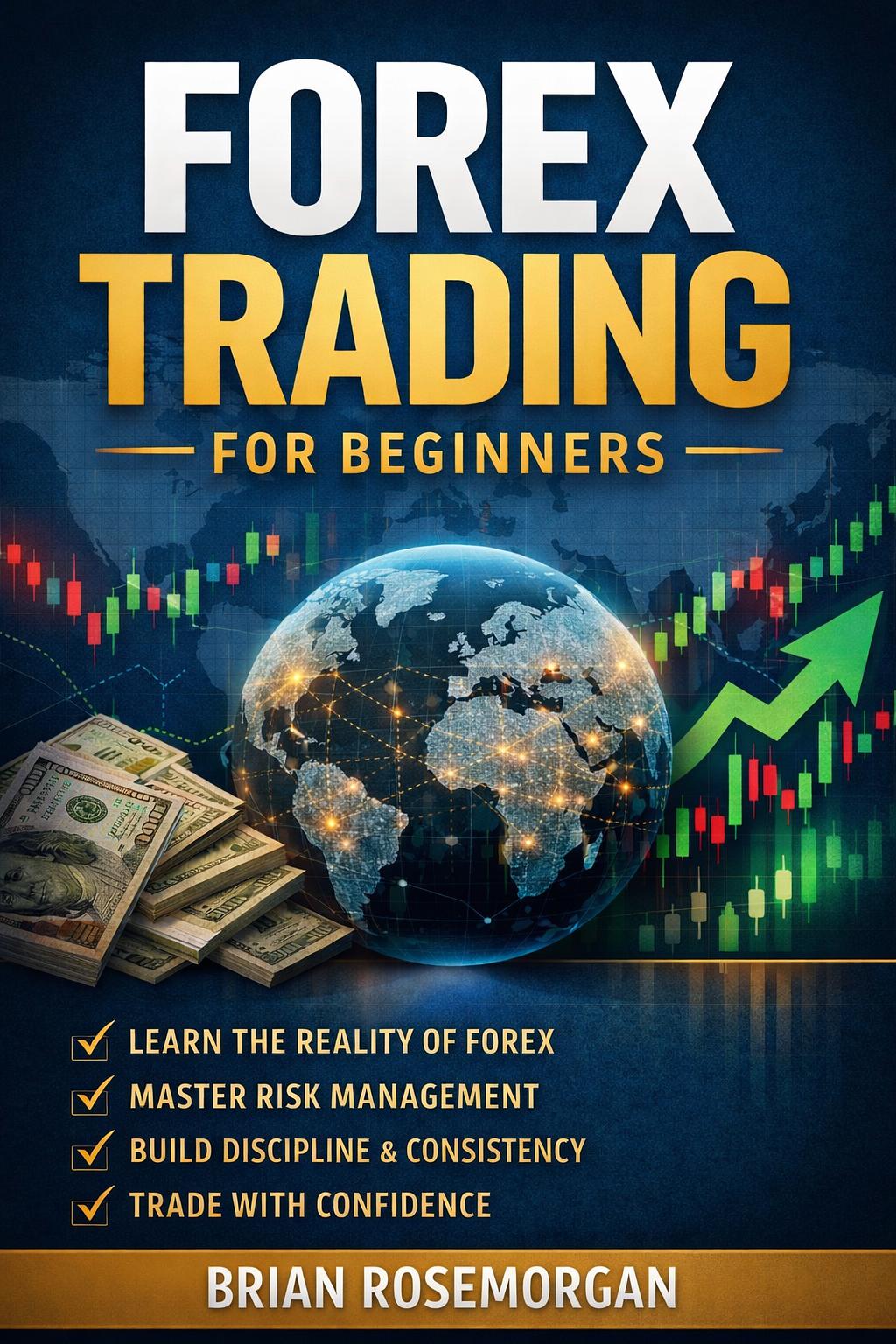
If you’ve enjoyed this free Academy lesson, my book brings everything together in one structured beginner-friendly guide covering risk management, leverage rules, and trading psychology.
🎉 Lesson Complete
Congratulations! You have completed South African Trading Clock.
Click below to record your progress and return to the Academy.
Your progress will be saved automatically. Return to the Academy and continue with your next lesson whenever you’re ready.
Disclaimer: Forex trading and CFDs involve significant risk and may not be suitable for every investor. The information provided on this website is for educational purposes only and should not be considered financial, investment, or trading advice. Always verify that your broker is properly regulated before depositing funds, and practise on a demo account before trading with real money. Never risk money you cannot afford to lose. Past performance does not guarantee future results. Please read our full
Risk Disclosure.